
AI and BLE for Water Quality Services
AI and BLE are Transforming Modern Water Quality Services
Water quality services are becoming increasingly data driven as utilities, environmental laboratories, municipalities, industrial facilities, watershed authorities, and environmental service providers seek continuous visibility into water conditions, infrastructure performance, regulatory compliance, and field operations. AI and BLE technologies enable water quality professionals to collect, analyze, and act upon operational data faster than conventional manual inspection methods while improving measurement accuracy and resource utilization.
AI enhances BLE-enabled sensing by transforming continuous environmental measurements into actionable operational intelligence. BLE sensors, BLE beacons, and BLE gateways provide localized wireless connectivity for water quality monitoring instruments, laboratory equipment, sampling stations, mobile inspection teams, storage facilities, treatment assets, and maintenance personnel. AI models process these datasets to identify contamination risks, predict equipment failures, optimize sampling schedules, detect abnormal water quality trends, and support regulatory reporting.
Organizations responsible for drinking water, wastewater, reclaimed water, groundwater, rivers, reservoirs, lakes, industrial discharge, stormwater, and environmental compliance increasingly deploy AI and BLE solutions to improve operational efficiency while maintaining public health and environmental protection. Supported by decades of supplying BLE, RFID, and IoT technologies, GAO helps organizations implement reliable monitoring systems that integrate with existing operational software and field infrastructure. Headquartered in New York City and Toronto, GAO has served Fortune 500 companies, research organizations, universities, and government agencies throughout the United States and Canada with high-quality hardware products, rigorous quality assurance, and expert technical support.
AI and BLE for Smart Water Quality Monitoring Services
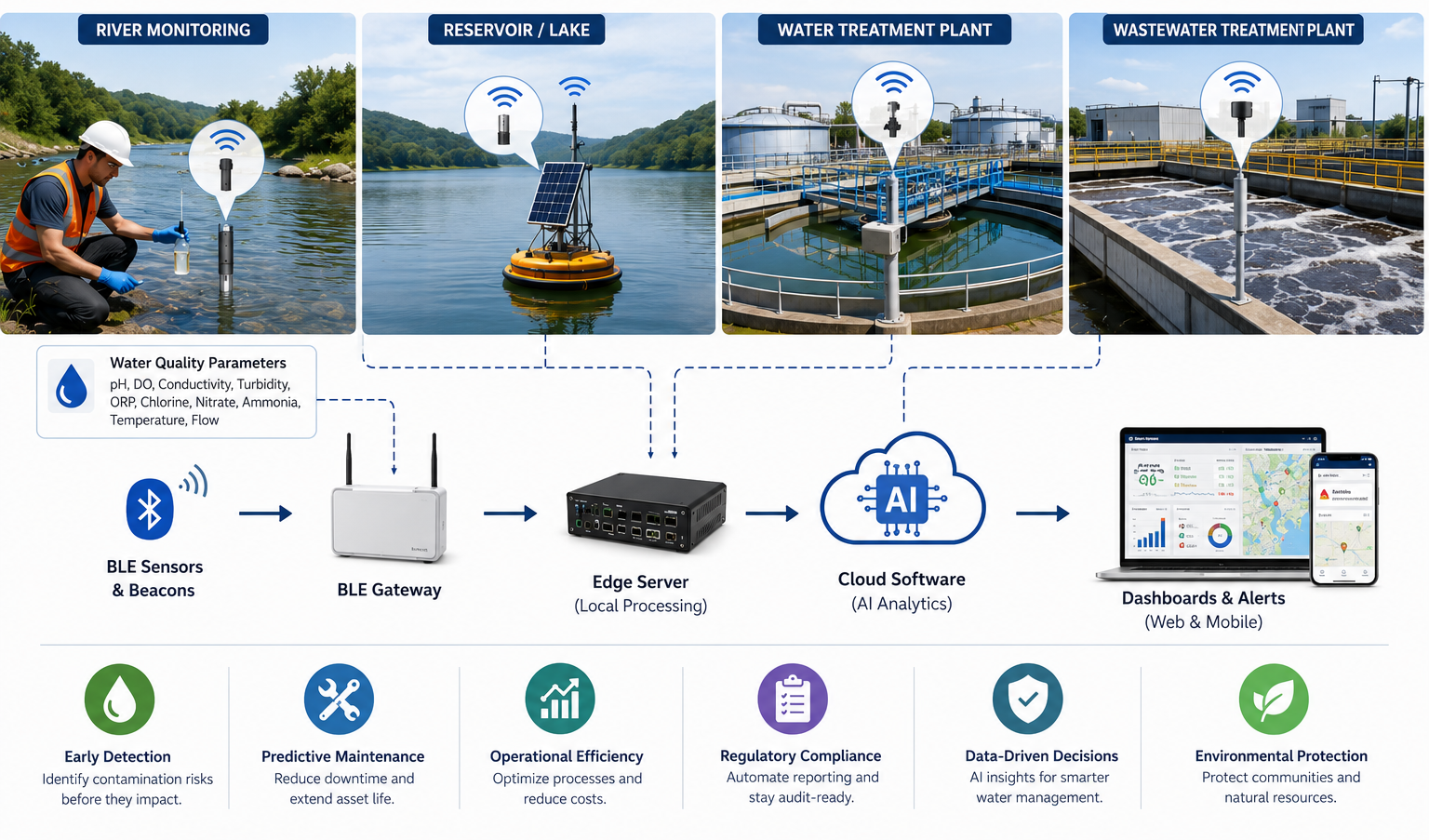
AI and BLE technologies enable real-time water quality monitoring across rivers, reservoirs, drinking water treatment plants, and wastewater treatment facilities. BLE sensors collect key water quality measurements and transmit data through BLE gateways and edge computing to AI-powered software for monitoring, predictive analytics, and operational decision-making.
Understanding AI and BLE in Water Quality Services
Water quality services encompass continuous monitoring, laboratory analysis, field inspections, compliance verification, environmental surveillance, infrastructure assessment, and operational management across drinking water distribution systems, wastewater treatment facilities, industrial discharge programs, watersheds, reservoirs, groundwater resources, recreational water bodies, desalination plants, irrigation systems, and environmental restoration projects. Reliable data collection and rapid operational response are essential because water quality conditions can change quickly due to contamination events, weather conditions, equipment malfunctions, infrastructure failures, or industrial activities.
BLE provides an energy-efficient wireless communication method for connecting distributed sensing devices throughout water quality operations. BLE sensors monitor critical environmental parameters while BLE beacons identify sampling locations, laboratory assets, mobile inspection equipment, chemical storage areas, calibration instruments, and maintenance resources. BLE gateways aggregate data from numerous nearby devices before securely forwarding information to edge software, privately hosted servers, or cloud-hosted management systems.
Artificial intelligence extends these capabilities by analyzing large volumes of sensor measurements, historical laboratory records, environmental variables, weather forecasts, hydraulic models, maintenance logs, and operational data. Machine learning algorithms recognize subtle patterns that may indicate contamination, sensor drift, infrastructure deterioration, chemical imbalance, or treatment process instability before these conditions become operational incidents.
Modern AI and IoT deployments also strengthen collaboration between laboratory scientists, environmental engineers, field technicians, compliance officers, treatment plant operators, maintenance supervisors, GIS specialists, utility managers, and emergency response teams. Rather than relying solely on periodic manual inspections, personnel receive continuous operational intelligence that supports faster decisions, proactive maintenance, optimized sampling strategies, and improved regulatory compliance.
Water quality organizations commonly integrate AI and BLE solutions with supervisory control and data acquisition software, laboratory information management systems (LIMS), geographic information systems (GIS), computerized maintenance management systems (CMMS), enterprise asset management (EAM) software, environmental information management systems (EIMS), enterprise resource planning (ERP) software, and business intelligence reporting tools. These integrations reduce duplicate data entry while improving operational transparency across laboratory, field, maintenance, and management functions.
GAO has supported organizations implementing BLE-enabled monitoring hardware that complements existing industrial communication systems while simplifying data collection across distributed environmental monitoring operations.
AI and BLE for Smart Water Quality Monitoring Services
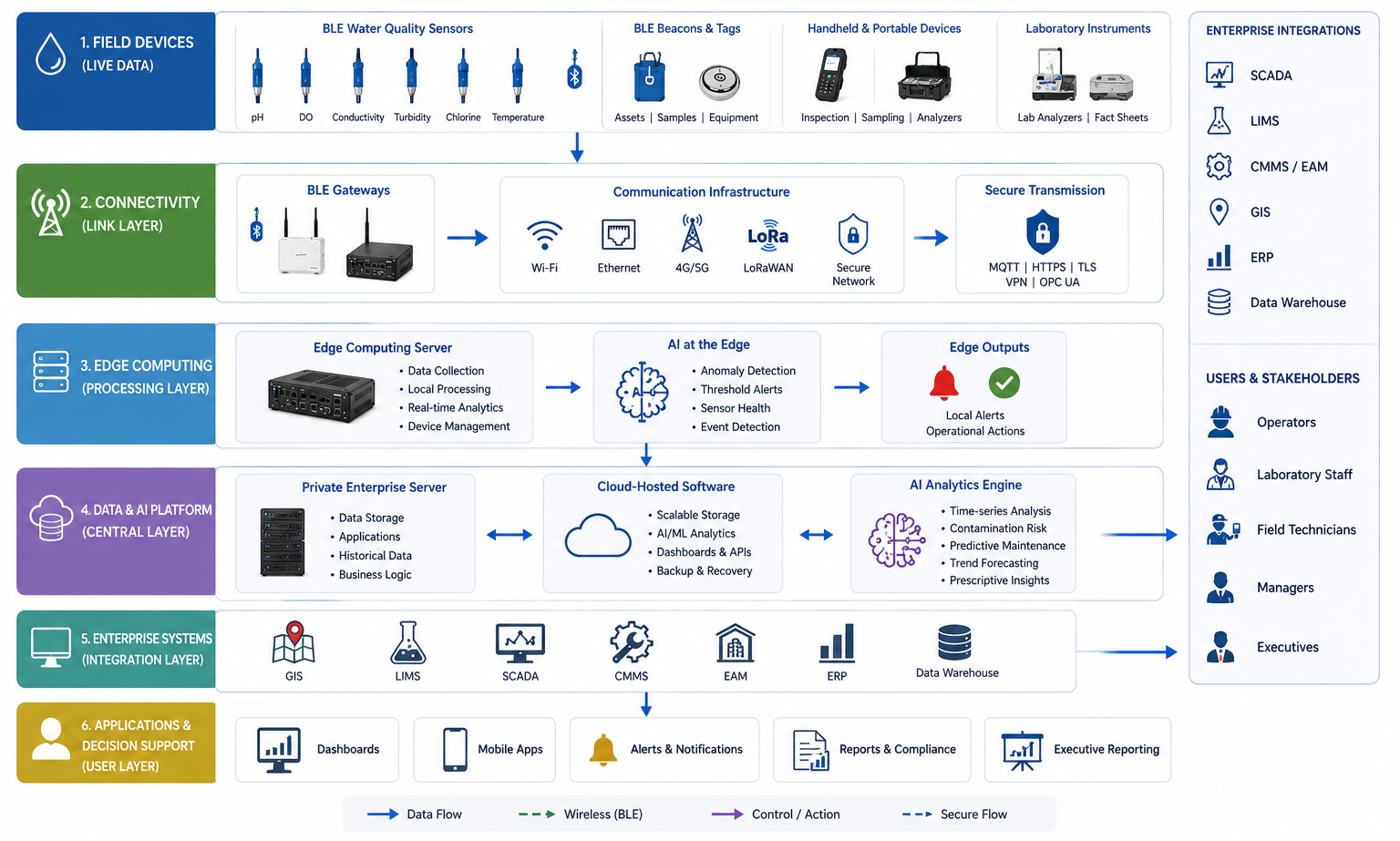
AI and BLE technologies connect water quality sensors, BLE gateways, edge computing, cloud software, and enterprise systems into a unified monitoring solution. The system enables secure data collection, AI-powered analytics, real-time dashboards, and operational decision support for water quality services.
AI and BLE Applications Across Water Quality Services
AI and BLE technologies support numerous operational workflows across water quality services by improving environmental visibility, accelerating decision making, and enhancing regulatory compliance. Each deployment scenario addresses unique operational requirements while sharing a common objective of delivering timely, accurate, and reliable environmental intelligence.
Drinking Water Distribution Monitoring
Municipal drinking water providers deploy BLE-enabled sensors throughout reservoirs, pumping stations, storage tanks, pressure zones, booster stations, and distribution networks to monitor chlorine residuals, pH, conductivity, turbidity, temperature, pressure, and flow conditions. AI continuously evaluates these measurements to detect contamination indicators, predict water quality degradation, optimize flushing schedules, and prioritize infrastructure inspections before customer service is affected.
Wastewater Treatment Operations
Wastewater treatment facilities monitor influent, primary clarification, biological treatment, secondary clarification, tertiary treatment, sludge processing, and final effluent quality using distributed BLE sensing devices. AI evaluates dissolved oxygen, ammonia, nitrate, phosphorus, suspended solids, biochemical oxygen demand trends, and equipment performance to optimize aeration systems, chemical dosing, and energy consumption while supporting discharge permit compliance.
Surface Water and Watershed Monitoring
Environmental agencies monitor rivers, lakes, reservoirs, wetlands, estuaries, and watersheds using BLE-connected monitoring stations. AI combines water quality measurements with rainfall data, watershed conditions, seasonal variations, satellite imagery, and historical environmental records to identify pollution sources, forecast harmful algal bloom risks, detect sediment transport, and improve watershed management decisions.
Industrial Discharge Compliance
Manufacturing facilities, mining operations, food processing plants, chemical manufacturers, pharmaceutical producers, and energy companies use BLE-enabled monitoring systems to supervise wastewater discharge quality before environmental release. AI identifies abnormal discharge characteristics, predicts permit violations, detects process abnormalities, and recommends operational adjustments that reduce environmental risk while improving regulatory compliance.
Groundwater Monitoring Programs
Environmental consultants and groundwater management authorities deploy BLE sensors within monitoring wells to measure groundwater level, conductivity, dissolved oxygen, pH, temperature, oxidation reduction potential, and contaminant concentrations. AI identifies long-term contamination trends, predicts groundwater migration patterns, prioritizes remediation activities, and supports environmental impact assessments.
Environmental Sampling and Laboratory Management
BLE beacons simplify the identification and traceability of water samples, laboratory instruments, calibration equipment, refrigeration units, chemical inventories, and analytical assets. AI assists laboratory personnel by optimizing sample routing, identifying quality control anomalies, predicting instrument maintenance requirements, and improving laboratory throughput without compromising analytical accuracy.
AI and BLE Applications for Water Quality Services
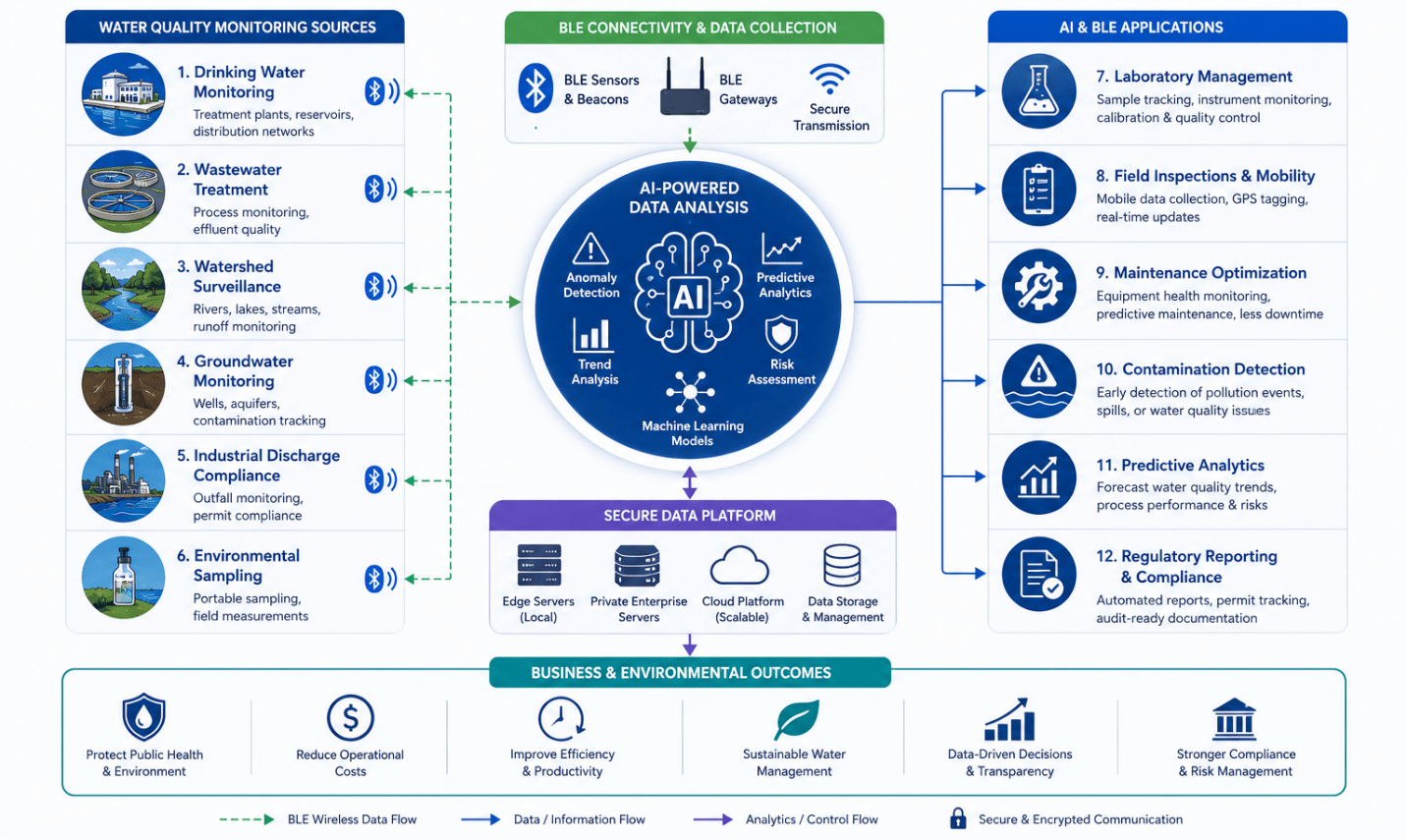
AI and BLE technologies support water quality services by enabling real-time monitoring, environmental sampling, laboratory management, predictive analytics, contamination detection, maintenance optimization, and regulatory reporting. The infographic illustrates how BLE-enabled data collection and AI-driven analysis improve operational efficiency and water quality decision-making across multiple monitoring applications.
Operational Workflow for AI and BLE in Water Quality Services
Water quality services depend on a continuous operational cycle that begins with field data acquisition and concludes with AI-supported operational actions. Unlike periodic manual inspections, AI and BLE solutions provide near real-time visibility into water quality conditions, infrastructure health, laboratory activities, and field operations. The workflow integrates BLE communication, edge intelligence, enterprise software, and AI analytics to support proactive environmental management and regulatory compliance.
Data Acquisition from Water Quality Assets
The operational process starts with BLE-enabled sensing devices deployed throughout water quality infrastructure. These devices continuously or periodically collect measurements from critical monitoring locations.
Common monitored parameters include:
- pH
- Dissolved oxygen
- Oxidation reduction potential (ORP)
- Conductivity
- Turbidity
- Water temperature
- Residual chlorine
- Free chlorine
- Total chlorine
- Nitrate concentration
- Nitrite concentration
- Ammonia
- Phosphate
- Total dissolved solids (TDS)
- Salinity
- Flow rate
- Water level
- Pressure
- Cyanobacteria indicators
- Algal bloom indicators
- Heavy metal concentrations
- Chemical oxygen demand (COD)
- Biochemical oxygen demand (BOD)
- Total suspended solids (TSS)
BLE beacons are also attached to sampling equipment, calibration kits, portable analyzers, laboratory assets, chemical storage containers, maintenance tools, inspection vehicles, and mobile monitoring stations. These devices improve asset visibility while supporting sample traceability and equipment accountability.
BLE communication is particularly effective inside treatment plants, pumping stations, laboratories, storage facilities, and enclosed operational environments where low power consumption, long battery life, and reliable short-range connectivity are essential.
Local BLE Communication and Gateway Processing
BLE sensors transmit encrypted measurement data to nearby BLE gateways installed throughout water treatment facilities, laboratory buildings, pumping stations, environmental monitoring shelters, and mobile inspection vehicles.
Gateways perform several important functions before forwarding information to higher-level software.
These functions include:
- Device authentication
- Sensor identification
- Timestamp synchronization
- Signal quality verification
- Local buffering during communication interruptions
- Preliminary data validation
- Removal of duplicate measurements
- Sensor health monitoring
- Firmware management
- Secure protocol conversion
Rather than transmitting every sensor reading directly to remote servers, gateways aggregate data from hundreds or thousands of BLE devices, significantly reducing communication overhead while improving network reliability.
Many water utilities also deploy industrial edge computers alongside BLE gateways to perform local analytics when immediate operational decisions are required.
Edge AI Processing
Certain operational decisions cannot wait for cloud processing. Edge AI enables rapid analysis close to the monitored assets.
Examples include:
- Sudden chlorine loss inside distribution systems
- Chemical dosing failures
- Unexpected turbidity spikes
- Pump station flooding
- Reservoir contamination alerts
- Rapid dissolved oxygen depletion
- Equipment overheating
- Sensor malfunction detection
Edge AI software evaluates incoming BLE measurements using lightweight machine learning models capable of executing on industrial edge servers.
Typical edge AI functions include:
- Threshold analysis
- Time-series anomaly detection
- Sensor drift detection
- Short-term forecasting
- Event classification
- Equipment condition assessment
- Alarm prioritization
Only significant operational events or summarized datasets are forwarded to central software, reducing bandwidth requirements while maintaining rapid response capabilities.
This approach is especially valuable for remote pumping stations, watershed monitoring sites, and isolated environmental monitoring installations where communication bandwidth may be limited.
Secure Communication Infrastructure
Following edge processing, validated operational data is transmitted using secure industrial communication technologies.
Common communication technologies include:
- Ethernet
- Industrial Ethernet
- Wi-Fi
- LTE
- 5G
- NB-IoT
- LoRaWAN
- Fiber optic networks
- Satellite communications for remote monitoring sites
- Private utility communication networks
Frequently used communication protocols include:
- MQTT
- HTTPS
- REST API
- OPC UA
- Modbus TCP
- BACnet where facility monitoring is integrated
- SNMP for network management
TLS encryption, VPN tunnels, digital certificates, identity management, and role-based access control protect operational data throughout transmission.
Environmental monitoring organizations frequently operate geographically distributed monitoring stations. Secure communication ensures laboratory personnel, utility operators, environmental regulators, and emergency response teams receive trusted operational information regardless of monitoring location.
GAO has supplied BLE hardware that integrates with secure industrial communication systems while supporting reliable environmental monitoring across geographically dispersed water quality operations.
Enterprise Software Integration
Validated data enters operational software responsible for environmental monitoring, regulatory reporting, maintenance planning, and business decision support.
Typical software integrations include:
- Laboratory Information Management Systems (LIMS)
- Supervisory Control and Data Acquisition (SCADA)
- Geographic Information Systems (GIS)
- Environmental Information Management Systems (EIMS)
- Computerized Maintenance Management Systems (CMMS)
- Enterprise Asset Management (EAM)
- Enterprise Resource Planning (ERP)
- Water Information Management Systems
- Data historians
- Business intelligence software
- Digital twin software for treatment facilities
- Mobile workforce management software
Integration eliminates isolated data silos by allowing laboratory personnel, field technicians, environmental scientists, operations managers, maintenance engineers, and executives to access consistent operational information.
For example, laboratory confirmation of elevated nitrate concentrations can automatically trigger maintenance work orders, notify compliance teams, update GIS records, and generate inspection schedules without requiring manual data entry.
AI and BLE Workflow for Water Quality Services
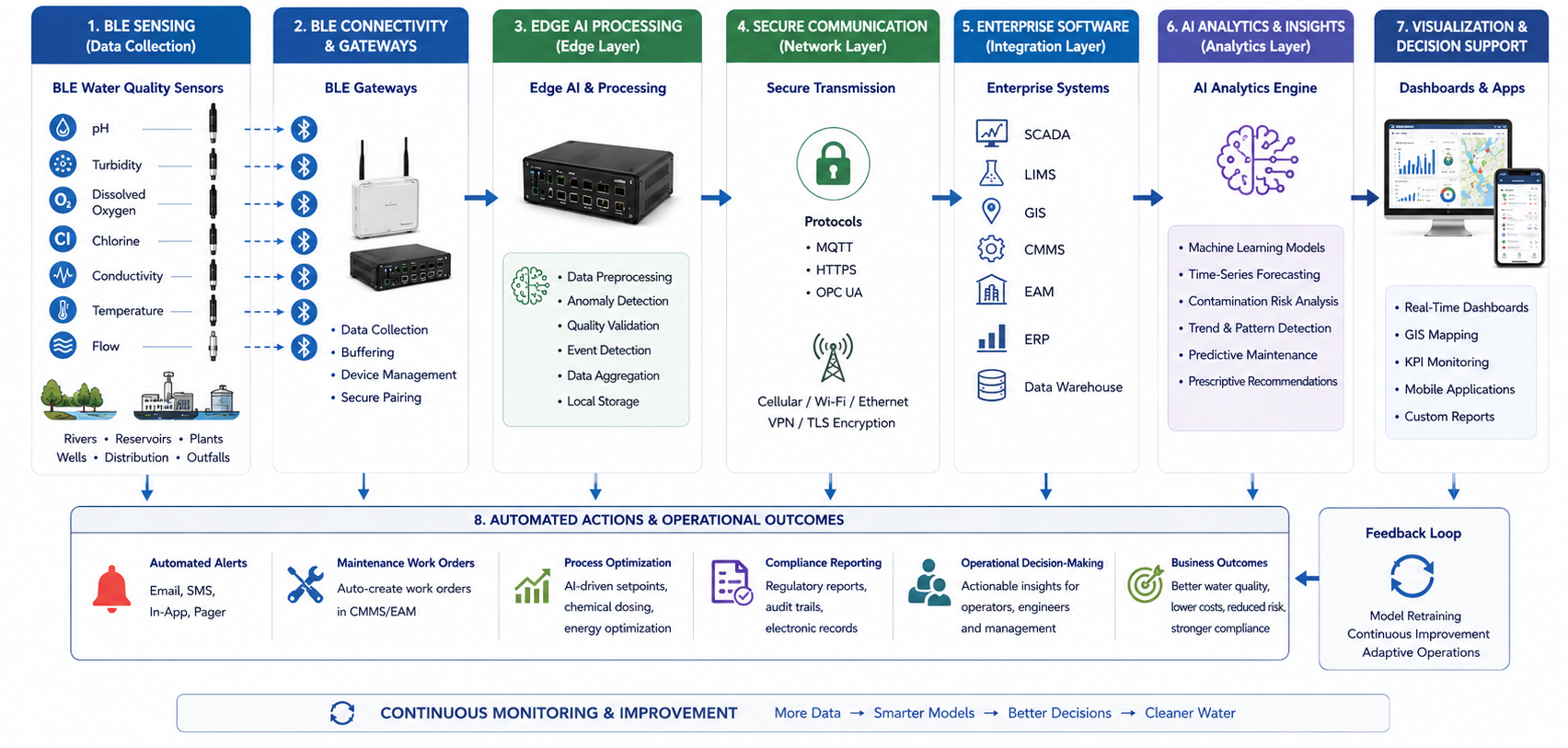
AI and BLE technologies streamline water quality services by collecting sensor data, performing edge AI analysis, securely transmitting information, integrating with enterprise systems, and generating actionable insights. The workflow highlights how continuous monitoring supports predictive maintenance, compliance reporting, and informed operational decisions.
BLE Infrastructure, AI Software, and Supporting Technologies
Successful AI and BLE deployments for water quality services require coordinated hardware, communication systems, AI software, cybersecurity mechanisms, and enterprise integration. Each component contributes to reliable data collection, accurate analytics, and efficient operational management.
BLE Sensors
BLE sensors form the foundation of the monitoring solution by collecting high-quality environmental data at the source. Depending on the application, these sensors may be installed permanently within treatment facilities, reservoirs, pumping stations, monitoring wells, or deployed temporarily for field investigations.
Common BLE-enabled sensing devices include:
- pH sensors
- Dissolved oxygen sensors
- Turbidity sensors
- Conductivity sensors
- ORP sensors
- Chlorine analyzers
- Temperature probes
- Flow meters
- Water level sensors
- Pressure transmitters
- Multiparameter water quality sondes
- Corrosion monitoring sensors
- Leak detection sensors
Battery-powered BLE sensors reduce installation complexity and are particularly beneficial for distributed monitoring locations where wired infrastructure is impractical.
BLE Beacons
BLE beacons provide location awareness and asset identification throughout water quality operations.
Common applications include:
- Water sample identification
- Laboratory equipment tracking
- Calibration standard management
- Chemical inventory monitoring
- Technician location assistance
- Inspection route verification
- Pump asset identification
- Valve location management
- Mobile analyzer tracking
- Vehicle utilization monitoring
By associating operational events with specific assets and locations, BLE beacons improve traceability and simplify compliance documentation.
BLE Gateways
BLE gateways collect data from nearby sensors and beacons, aggregate communications, and connect BLE networks to enterprise software. Industrial-grade gateways typically support multiple communication interfaces, allowing deployment across treatment plants, laboratories, pumping stations, and remote monitoring sites.
Advanced gateways commonly provide:
- Multi-device BLE connectivity
- Local data buffering
- Protocol translation
- Edge application support
- Secure remote management
- Network diagnostics
- Automatic device provisioning
- Firmware update management
Proper gateway placement is essential to maintain reliable coverage, minimize signal interference from concrete structures or metal equipment, and ensure uninterrupted communication in demanding operational environments.
AI Models Supporting Water Quality Services
Artificial intelligence converts continuous BLE sensor measurements into operational intelligence by identifying hidden patterns, predicting future conditions, and recommending corrective actions. Water quality services generate large volumes of time-series, laboratory, maintenance, weather, and hydraulic data that conventional rule-based systems often cannot analyze effectively.
Common AI models include:
- Time-series forecasting for water quality trends
- Anomaly detection for contamination events
- Predictive maintenance models for pumps, valves, and analyzers
- Classification models for water quality status
- Regression models for chemical dosage optimization
- Reinforcement learning for treatment process optimization
- Computer vision models for laboratory sample verification
- Natural language processing for regulatory document analysis
- Ensemble learning for multi-parameter risk assessment
- Explainable AI (XAI) for transparent operational decisions
Rather than replacing laboratory expertise or environmental engineering judgment, AI supports specialists by highlighting abnormal conditions, prioritizing investigations, and reducing the time required to evaluate thousands of measurements collected every day.
For example, a machine learning model may recognize subtle relationships among turbidity, conductivity, rainfall intensity, upstream discharge, and historical contamination records to predict elevated microbial risk several hours before laboratory confirmation becomes available.
AI Data Processing Pipeline
Reliable AI performance depends on high-quality data. Water quality organizations typically implement structured data processing workflows before AI models generate recommendations.
A typical processing sequence includes:
- BLE data collection
- Device authentication
- Data validation
- Missing value detection
- Sensor calibration verification
- Noise filtering
- Timestamp synchronization
- Data normalization
- Feature engineering
- AI model inference
- Confidence scoring
- Alert generation
- Dashboard visualization
- Automated workflow execution
- Long-term historical storage
Historical datasets remain valuable for retraining AI models, evaluating seasonal variations, improving prediction accuracy, and supporting continuous operational improvement.
Cloud Version
Cloud-hosted deployments are well suited for organizations operating geographically distributed monitoring locations, multiple laboratories, regional utility networks, or managed environmental monitoring services.
Typical cloud deployments include:
- Centralized AI model management
- Multi-site monitoring
- Fleet-wide BLE device administration
- Automatic software updates
- Elastic computing resources
- Long-term environmental data storage
- Enterprise dashboard access
- Mobile applications for field personnel
- Regulatory reporting services
- Disaster recovery capabilities
Cloud software is often preferred when organizations require rapid scalability, remote accessibility, simplified software maintenance, and centralized reporting across multiple treatment facilities or monitoring programs.
Environmental consultants managing monitoring projects across different municipalities also benefit from centralized cloud-hosted systems that provide secure access to authorized stakeholders without maintaining extensive local computing infrastructure.
Server Version
Many water utilities, industrial facilities, defense installations, research laboratories, and government agencies prefer privately managed server deployments because of cybersecurity policies, regulatory requirements, operational continuity, or data sovereignty considerations.
Server deployments may operate on:
- Private data centers
- Utility-owned computing facilities
- Regional operational centers
- Industrial edge servers
- Laboratory servers
- Customer-managed virtual infrastructure
- Hybrid cloud environments
Server-based software offers several advantages for sensitive water quality operations.
These include:
- Complete control over operational data
- Local AI processing during Internet outages
- Integration with existing SCADA systems
- Compliance with organizational cybersecurity policies
- Reduced external network dependency
- Customized software configurations
- Lower latency for operational decision-making
Large municipal water authorities frequently adopt hybrid deployments where operational control remains on privately managed servers while selected analytics, reporting functions, or backup services utilize cloud infrastructure.
Selecting between cloud and server deployments depends on communication availability, regulatory obligations, cybersecurity policies, operational resilience requirements, available IT resources, and long-term maintenance strategies rather than a universal preference for one model.
Cybersecurity and Data Protection
Water quality infrastructure is classified as critical infrastructure in many jurisdictions, making cybersecurity an essential design consideration throughout AI and BLE deployments.
Security measures should protect devices, communications, operational software, and stored information from unauthorized access or manipulation.
Typical security mechanisms include:
- BLE Secure Connections
- AES encryption
- TLS encryption
- VPN communication
- Device identity certificates
- Multi-factor authentication
- Role-based access control
- Zero Trust security principles
- Secure firmware updates
- Hardware root of trust
- Intrusion detection systems
- Security Information and Event Management (SIEM)
- Continuous vulnerability assessment
- Security audit logging
- Backup and disaster recovery procedures
Routine firmware maintenance, certificate renewal, network segmentation, and periodic penetration testing help reduce cybersecurity risks while maintaining reliable water quality operations.
Organizations operating public drinking water systems often implement additional monitoring to satisfy national cybersecurity guidance for critical infrastructure and essential public services.
Communication Protocols and Interoperability
Water quality monitoring solutions rarely operate as isolated systems. Successful deployments depend on interoperability with existing operational technologies and environmental information systems.
Frequently used communication protocols include:
- Bluetooth Low Energy (BLE)
- MQTT
- OPC UA
- Modbus TCP
- HTTPS
- REST API
- AMQP
- WebSocket
- SNMP
- DNP3 where applicable
- IEC 60870-5 for utility environments
- BACnet for facility infrastructure integration
Protocol selection depends on latency requirements, interoperability objectives, network topology, cybersecurity requirements, and compatibility with existing operational software.
Open communication standards simplify future expansion by allowing additional sensors, treatment facilities, laboratory systems, or monitoring stations to be incorporated without requiring extensive software redevelopment.
Supporting Infrastructure
Reliable AI and BLE deployments depend upon supporting infrastructure that extends beyond sensors and communication devices.
Important infrastructure components include:
- Industrial edge computers
- Environmental monitoring stations
- Ruggedized BLE gateways
- High-availability servers
- Backup power systems
- UPS units
- Industrial Ethernet switches
- Fiber optic backbone networks
- Secure wireless access points
- GPS time synchronization
- Network monitoring software
- Database servers
- Storage arrays
- Redundant communication links
- Environmental equipment enclosures
Environmental conditions should also be considered during deployment. Outdoor monitoring stations often require weather-resistant enclosures, corrosion-resistant materials, lightning protection, solar power systems, and battery backup to maintain continuous operation in harsh environments.
Engineering Design Considerations and Deployment Best Practices
Successful AI and BLE implementation requires careful planning before field deployment. Engineering teams should evaluate operational requirements, communication performance, maintenance accessibility, and long-term scalability during system design rather than after installation.
Key engineering considerations include:
- Conduct wireless site surveys before installing BLE gateways.
- Position gateways to minimize interference from reinforced concrete, steel structures, pumps, and large electrical equipment.
- Select BLE sensors with appropriate ingress protection ratings for submerged, outdoor, or corrosive environments.
- Establish calibration schedules for pH, dissolved oxygen, conductivity, turbidity, and chlorine sensors to maintain measurement accuracy.
- Design redundant communication paths for critical drinking water and wastewater treatment assets.
- Synchronize timestamps across BLE devices, gateways, edge servers, and enterprise software to preserve data integrity.
- Implement automated health monitoring for sensors, gateways, batteries, and communication links.
- Validate AI models using historical seasonal datasets to reduce false alarms caused by normal environmental variation.
- Incorporate explainable AI techniques so operators understand why recommendations or alerts are generated.
- Plan scalable device management to accommodate future monitoring stations, treatment facilities, and laboratory expansions.
- Integrate maintenance workflows with CMMS and EAM software so AI-generated recommendations automatically create work orders where appropriate.
- Perform regular cybersecurity assessments, firmware updates, and access reviews to maintain compliance with organizational security policies.
These engineering practices improve long-term system reliability while reducing lifecycle costs and minimizing operational disruptions. Organizations that combine disciplined deployment planning with continuous monitoring and periodic optimization typically achieve higher data quality, better regulatory compliance, and more effective use of AI-driven operational intelligence.
AI and BLE Solution for Water Quality Services
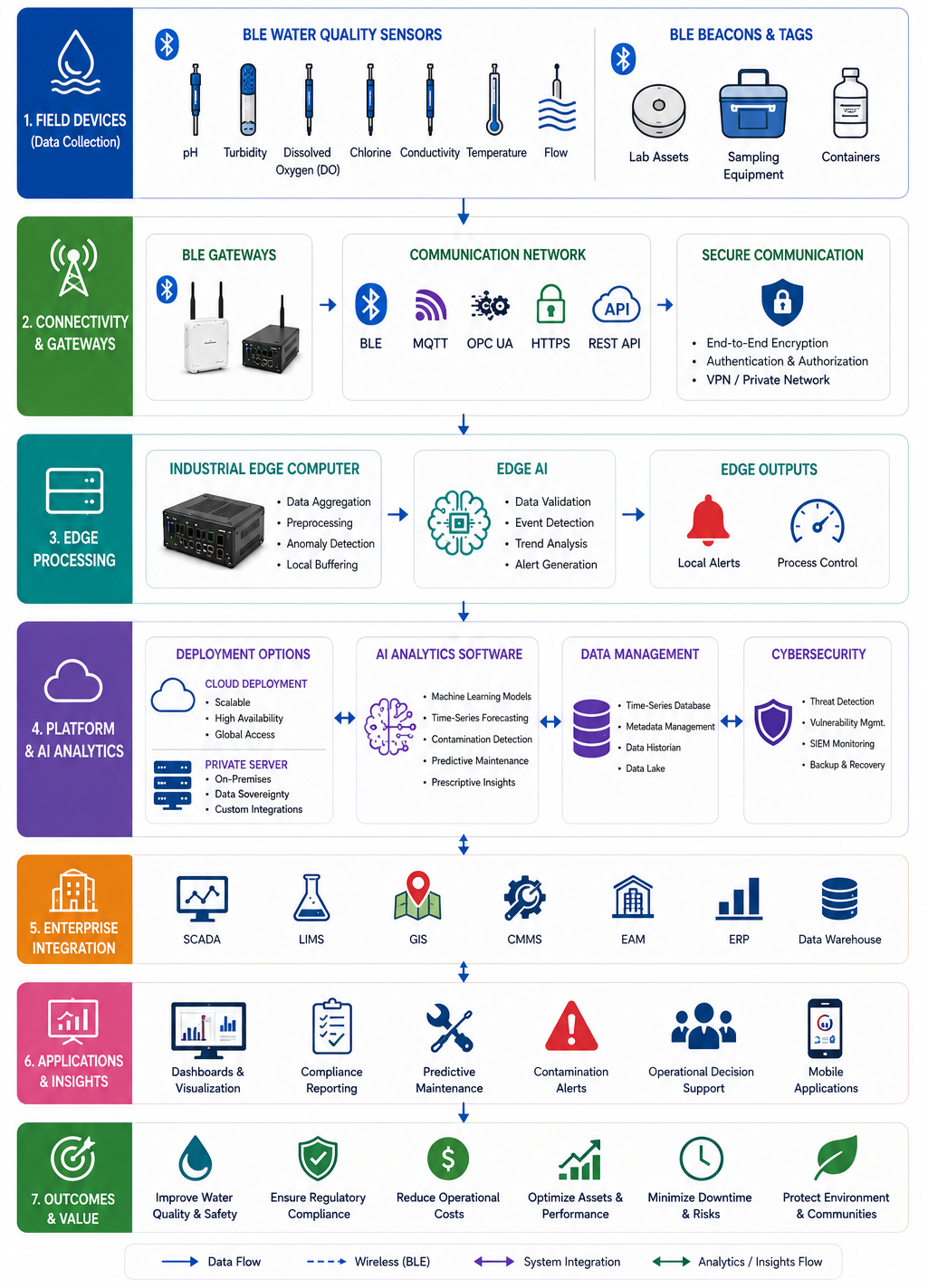
AI and BLE technologies connect water quality sensors, BLE gateways, edge AI, enterprise software, and dashboards in a simple monitoring workflow. The diagram highlights secure data flow that enables contamination detection, predictive maintenance, compliance reporting, and operational decision-making.
Technical Capabilities and Business Value of AI and BLE for Water Quality Services
Combining AI with BLE technologies enables water quality organizations to move beyond periodic monitoring toward continuous operational intelligence. BLE sensors, BLE beacons, and BLE gateways deliver timely field data, while AI transforms that information into predictive insights that improve water quality, infrastructure reliability, regulatory compliance, and operational efficiency. Rather than simply collecting measurements, AI and BLE solutions support informed decisions throughout the entire water quality lifecycle.
Continuous Water Quality Visibility
BLE-connected sensors provide continuous measurements from treatment plants, reservoirs, pumping stations, groundwater wells, distribution networks, industrial discharge points, and environmental monitoring stations. AI evaluates these measurements collectively instead of treating each parameter independently.
Operational advantages include:
- Early identification of water quality deterioration
- Continuous monitoring without frequent manual inspections
- Improved awareness of changing environmental conditions
- Faster recognition of abnormal chemical or biological trends
- Better visibility across geographically distributed assets
Continuous monitoring allows operators to detect developing issues before they affect treatment performance, customer water quality, or environmental compliance.
AI-Driven Contamination Detection
Traditional monitoring often depends on scheduled sampling intervals that may delay the identification of contamination events. AI continuously analyzes sensor data, laboratory results, hydraulic information, weather conditions, and historical trends to recognize abnormal behavior that could indicate emerging risks.
Examples include:
- Chemical contamination
- Cross-connection events
- Elevated turbidity
- Chlorine residual loss
- Harmful algal bloom development
- Wastewater bypass incidents
- Industrial discharge abnormalities
- Groundwater contamination migration
Rather than relying solely on predefined alarm thresholds, machine learning models evaluate combinations of variables that frequently precede contamination events, providing earlier notification and improving response times.
Predictive Maintenance for Water Infrastructure
Water quality operations depend on numerous mechanical and analytical assets whose failures can affect regulatory compliance and service continuity.
AI supports predictive maintenance for:
- Pumps
- Chemical dosing systems
- Mixers
- Valves
- Filtration equipment
- UV disinfection units
- Chlorination systems
- Online analyzers
- Laboratory instruments
- BLE gateways
- Environmental monitoring stations
AI evaluates vibration, operating hours, maintenance history, calibration records, energy consumption, and environmental conditions to estimate remaining useful life and recommend maintenance before failures occur.
Benefits include:
- Reduced emergency repairs
- Improved equipment availability
- Lower maintenance costs
- Extended equipment life
- Better spare parts planning
- Reduced treatment interruptions
GAO has supplied BLE hardware that supports reliable condition monitoring and asset visibility for organizations seeking proactive maintenance strategies.
Intelligent Sampling Optimization
Water quality monitoring programs frequently involve thousands of routine sampling activities across extensive distribution systems and environmental monitoring locations.
AI optimizes sampling by considering:
- Historical contamination patterns
- Seasonal variation
- Population demand
- Rainfall forecasts
- Watershed conditions
- Treatment performance
- Previous laboratory results
- Hydraulic behavior
- Regulatory sampling requirements
Instead of maintaining static sampling schedules, AI recommends higher sampling frequency for high-risk locations while reducing unnecessary sampling where conditions remain consistently stable.
This improves resource utilization without compromising regulatory compliance.
Laboratory Efficiency Improvement
Environmental laboratories process large numbers of drinking water, wastewater, groundwater, industrial discharge, and environmental samples every day.
BLE beacons improve laboratory traceability by identifying:
- Water samples
- Analytical instruments
- Calibration standards
- Refrigerated storage
- Chemical inventories
- Laboratory equipment
- Sample preparation stations
AI complements these capabilities by:
- Prioritizing urgent analyses
- Predicting laboratory workload
- Detecting analytical anomalies
- Identifying calibration drift
- Improving instrument utilization
- Reducing sample turnaround time
Laboratory personnel spend less time locating assets and manually coordinating workflows while maintaining analytical quality.
Regulatory Compliance Support
Water quality organizations operate under strict environmental and public health regulations requiring comprehensive documentation and accurate reporting.
AI assists compliance activities by:
- Monitoring permit limits
- Detecting compliance risks
- Automating regulatory calculations
- Validating monitoring data
- Identifying incomplete records
- Generating compliance reports
- Supporting audit preparation
- Maintaining historical traceability
Continuous BLE data collection provides a detailed operational history that simplifies investigations, inspections, and regulatory reviews.
Organizations benefit from improved reporting accuracy while reducing administrative effort.
Improved Field Workforce Productivity
Field technicians spend significant time traveling between monitoring locations, collecting measurements, documenting observations, and locating equipment.
BLE technology improves field operations through:
- Asset identification
- Inspection verification
- Equipment location
- Mobile data collection
- Technician navigation
- Calibration tracking
- Maintenance documentation
AI further improves workforce productivity by prioritizing field activities according to operational risk rather than fixed schedules.
Inspection teams receive recommendations for locations requiring immediate attention, reducing unnecessary travel and improving resource allocation.
Energy and Chemical Optimization
Water treatment processes consume considerable amounts of electricity and treatment chemicals.
AI analyzes:
- Pump operation
- Aeration performance
- Flow variations
- Chemical consumption
- Reservoir levels
- Distribution demand
- Water quality trends
Optimization algorithms recommend operational adjustments that maintain treatment effectiveness while reducing energy usage and chemical consumption.
Benefits include:
- Lower operating costs
- Reduced energy demand
- Improved sustainability
- More stable treatment processes
- Better chemical inventory management
Scalable Monitoring Across Distributed Water Systems
Large utilities often manage hundreds of pumping stations, reservoirs, treatment facilities, pressure zones, and monitoring sites.
BLE enables standardized monitoring across these distributed environments while AI provides centralized operational intelligence.
Scalable deployments support:
- Municipal water utilities
- Regional water authorities
- Environmental monitoring agencies
- Watershed management organizations
- Industrial wastewater programs
- Agricultural irrigation districts
- Mining water management
- Drinking water laboratories
Standardized device management simplifies expansion without requiring major redesigns as monitoring networks grow.
Operational Improvements Delivered by AI and BLE
Successful deployments improve both technical performance and day-to-day operational efficiency across water quality services.
Key operational improvements include:
- Faster contamination detection
- Improved treatment process stability
- Greater visibility into distributed assets
- Reduced manual inspections
- Better utilization of laboratory resources
- Improved preventive maintenance planning
- More accurate environmental reporting
- Higher sampling efficiency
- Faster emergency response
- Reduced equipment downtime
- Improved calibration management
- Enhanced workforce coordination
- Increased operational transparency
- Better long-term environmental trend analysis
- More consistent regulatory compliance
These improvements contribute to higher service reliability, reduced operational costs, and stronger protection of public health and environmental resources.
Benefits of AI and BLE for Water Quality Services
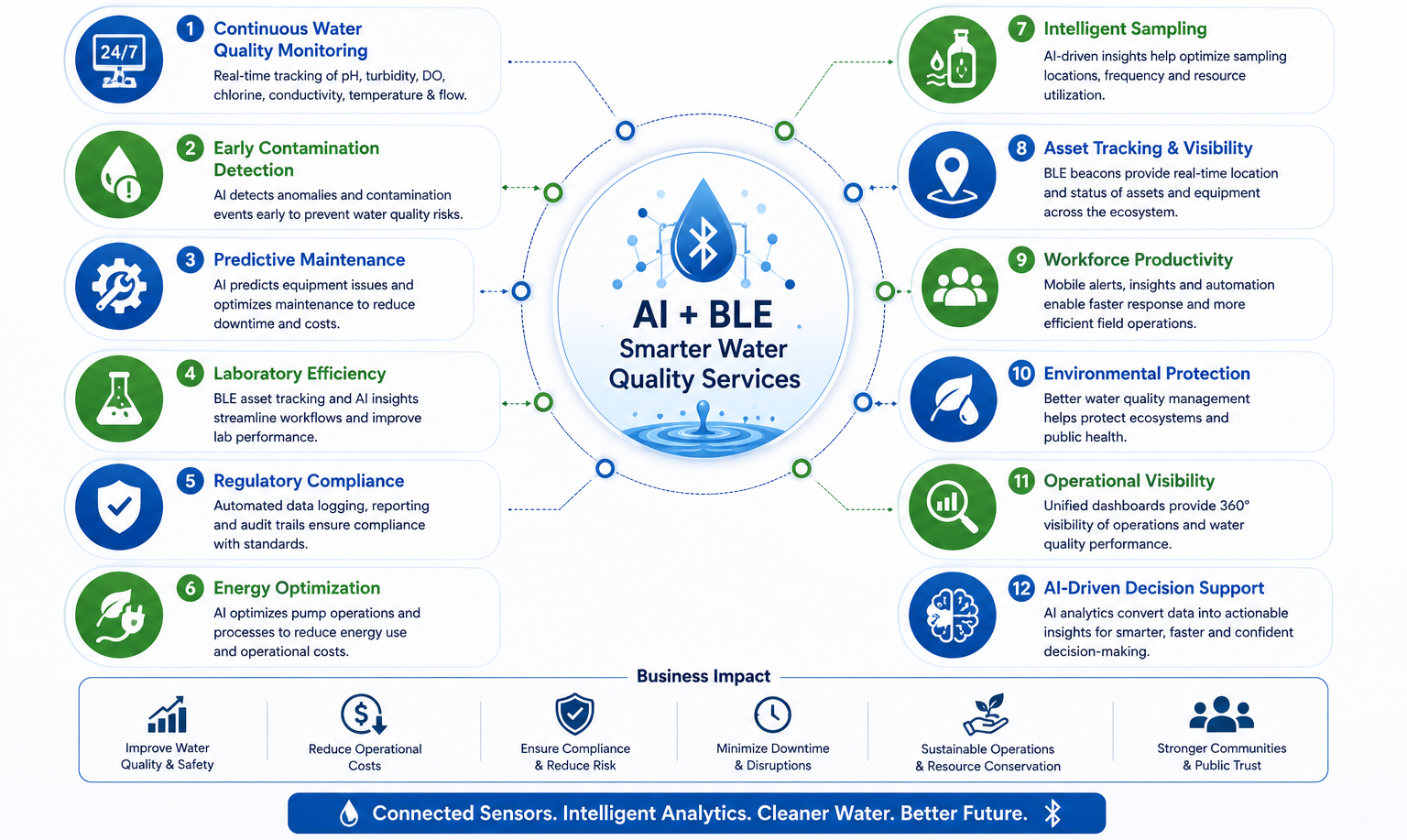
Traditional vs. AI and BLE-Enabled Water Quality Services
| Operational Area | Traditional Water Quality Services | AI and BLE-Enabled Water Quality Services |
| Monitoring Frequency | Periodic manual measurements | ✓ Continuous real-time monitoring |
| Contamination Detection Speed | Delayed detection after scheduled sampling | ✓ Early AI-driven anomaly detection and alerts |
| Sampling Efficiency | Fixed sampling schedules | ✓ AI-optimized sampling based on risk and trends |
| Laboratory Traceability | Manual sample tracking and documentation | ✓ BLE-enabled sample and asset tracking |
| Predictive Maintenance | Reactive maintenance after failures | ✓ AI predicts maintenance needs before failures |
| Regulatory Reporting | Manual data compilation and reporting | ✓ Automated compliance reporting and audit support |
| Asset Visibility | Limited visibility of field and laboratory assets | ✓ Real-time BLE asset tracking and location monitoring |
| Workforce Productivity | Time-consuming manual inspections | ✓ AI-guided inspections and mobile decision support |
| Infrastructure Reliability | Maintenance based on fixed schedules | ✓ Condition-based maintenance improves reliability |
| Operational Costs | Higher labor and maintenance costs | ✓ Lower operating costs through automation and optimization |
| Environmental Risk Management | Slow response to water quality issues | ✓ Proactive risk identification and rapid response |
| Decision-Making | Historical reports and manual analysis | ✓ Real-time dashboards with AI-driven operational insights |
Implementation Recommendations for AI and BLE in Water Quality Services
Successful AI and BLE deployments require more than selecting sensors and communication devices. Long-term success depends on careful planning, interoperability, data quality, cybersecurity, workforce readiness, and continuous optimization. Water quality organizations should adopt a phased implementation strategy that minimizes operational disruption while providing measurable improvements throughout the deployment lifecycle.
Establish Clear Operational Objectives
Deployment planning should begin by defining measurable operational goals aligned with regulatory requirements and organizational priorities.
Common objectives include:
- Improve drinking water quality monitoring
- Reduce contamination response time
- Increase laboratory efficiency
- Improve wastewater treatment performance
- Reduce equipment downtime
- Optimize chemical dosing
- Strengthen regulatory compliance
- Increase sampling efficiency
- Improve groundwater surveillance
- Enhance watershed monitoring
- Reduce maintenance costs
- Improve operational reporting
Clearly defined objectives also simplify project evaluation by linking AI and BLE deployments to measurable operational outcomes.
Prioritize High-Value Monitoring Locations
Organizations often achieve the greatest return by deploying BLE-enabled monitoring in locations where operational risk is highest.
Typical priority locations include:
- Drinking water treatment plants
- Wastewater treatment facilities
- Reservoirs
- Pumping stations
- Distribution network pressure zones
- Critical groundwater wells
- Industrial discharge monitoring points
- Laboratory sample receiving areas
- Chemical storage facilities
- Environmental monitoring stations
Starting with high-impact locations enables organizations to validate system performance before expanding across larger monitoring networks.
Design for Interoperability and Future Expansion
Water quality monitoring systems should support future growth without requiring major redesigns.
Recommended practices include:
- Adopt open communication protocols whenever practical.
- Integrate BLE monitoring with existing SCADA, LIMS, GIS, CMMS, EAM, ERP, and business intelligence software.
- Standardize device naming, asset identification, and data structures across facilities.
- Implement centralized device management for BLE sensors, gateways, and beacons.
- Plan sufficient network capacity for additional monitoring stations and field assets.
- Use modular software components that simplify future upgrades.
Designing with interoperability in mind reduces integration complexity and protects long-term technology investments.
Maintain Data Quality Throughout the System
AI performance depends directly on the quality of operational data.
Organizations should establish procedures for:
- Routine sensor calibration
- Instrument verification
- Data validation
- Automated quality checks
- Timestamp synchronization
- Device health monitoring
- Missing data identification
- Historical data management
- Version control for AI models
- Periodic performance evaluation
Reliable data improves prediction accuracy while reducing false alarms and unnecessary investigations.
Strengthen Cybersecurity and Operational Resilience
Because water quality infrastructure supports essential public services, cybersecurity should be incorporated throughout the deployment lifecycle.
Recommended practices include:
- Encrypt BLE and IP-based communications.
- Enforce role-based access control.
- Segment operational networks from corporate networks.
- Maintain secure firmware and software update processes.
- Perform periodic vulnerability assessments.
- Monitor network activity using SIEM solutions.
- Maintain redundant communication paths for critical facilities.
- Test backup and disaster recovery procedures regularly.
These measures help protect operational continuity and maintain confidence in AI-driven decision support.
Train Personnel and Continuously Optimize
Successful adoption depends on people as much as technology.
Training programs should include:
- BLE device management
- Sensor calibration procedures
- AI-assisted decision support
- Cybersecurity awareness
- Mobile application usage
- Maintenance workflows
- Regulatory reporting
- Data interpretation
- Incident response procedures
Organizations should also review operational performance periodically and refine AI models using newly collected environmental and operational data to improve long-term accuracy.
GAO has supported organizations by providing BLE hardware, technical guidance, and integration expertise that complement existing monitoring infrastructure and operational software while helping customers expand their AI and IoT capabilities over time.
AI and BLE Deployment Decision Tree for Water Quality Services
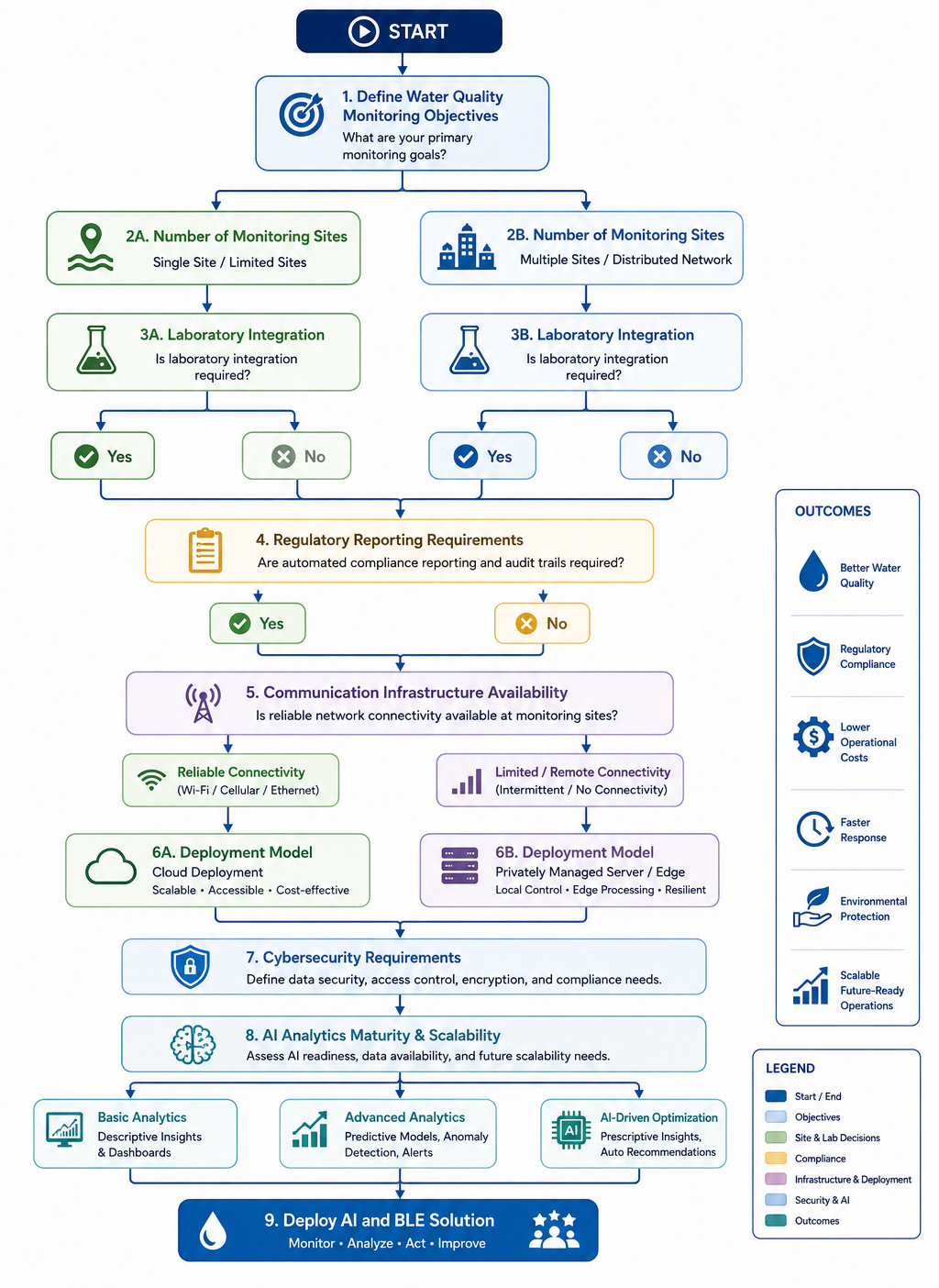
A structured approach to planning AI and BLE deployment for water quality services, guiding organizations through monitoring objectives, deployment options, cybersecurity, AI readiness, and implementation decisions to support efficient and scalable water quality monitoring.
Advancing Water Quality Services with AI and BLE
AI and BLE are reshaping water quality services by enabling continuous environmental monitoring, intelligent analysis, and proactive operational management. BLE sensors, BLE beacons, and BLE gateways provide reliable field connectivity, while AI transforms large volumes of environmental and operational data into timely recommendations that improve treatment performance, infrastructure reliability, laboratory efficiency, regulatory compliance, and environmental stewardship.
Organizations that combine accurate sensing, secure communications, well-governed data, and explainable AI are better positioned to detect contamination earlier, optimize maintenance, reduce operating costs, and strengthen public confidence in water quality management. A phased implementation strategy, combined with open standards, robust cybersecurity, and ongoing model refinement, supports sustainable long-term success.
For more than three decades, GAO has supplied BLE, RFID, and IoT hardware products and systems to organizations across the United States and Canada. Headquartered in New York City and Toronto, and recognized among the world’s leading B2B and B2G suppliers of BLE and RFID technologies, we continue to support utilities, environmental service providers, research institutions, government agencies, and industrial organizations with quality-assured products, engineering expertise, and remote or onsite technical support.
Building the Future of Industrial AI and IoT with Aperture Venture Studio and GAO RFID Inc.
For more than three decades, GAO Group of Companies has invested extensively in research and development of industrial BLE, RFID, and IoT technologies. As generative AI has demonstrated significant value across environmental monitoring and water quality services, we have continued advancing AI and IoT solutions while establishing Aperture Venture Studio to accelerate the development and adoption of innovative AI and IoT solutions for industries such as water quality services and broader environmental operations.
Aperture has attracted leading AI and IoT engineers, experienced business and operational leaders, respected investors, and established industry participants who contribute practical expertise to emerging technology initiatives. Through the Aperture Ventures Summit and TekSummit, we also foster technical collaboration and knowledge sharing on advanced AI, BLE, RFID, and IoT applications.
Together, these efforts have strengthened diverse technical communities dedicated to industrial AI and IoT innovation. We welcome opportunities to collaborate with:
- Advisors, co-founders, and employees
- Investors
- Customers seeking AI, BLE, RFID, and IoT solutions, engineering expertise, and technical support
End-to-End AI and BLE Solution for Water Quality Services
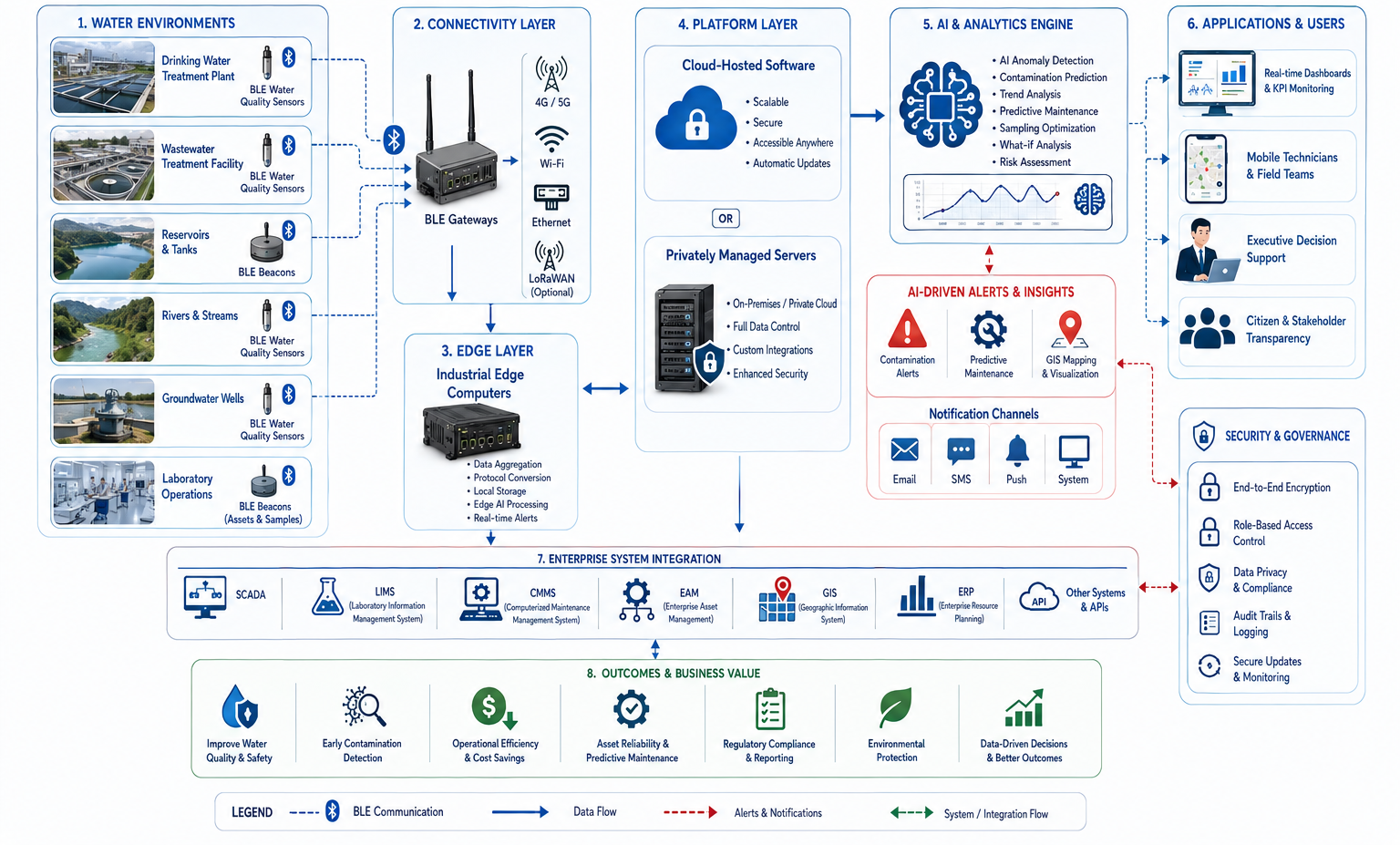
AI and BLE technologies connect water quality monitoring sites, edge computing, cloud and server software, enterprise systems, and operational users into a unified solution. The illustration highlights secure data flow, AI-driven analytics, predictive maintenance, compliance reporting, and real-time decision support across water quality services.