
AI and BLE for Specialty Materials Manufacturing
AI-Driven Specialty Materials Manufacturing Using BLE-Enabled Industrial Intelligence
Specialty materials manufacturing depends on highly controlled production environments where formulation accuracy, process consistency, traceability, contamination prevention, and quality assurance directly determine product performance. Manufacturers producing advanced polymers, specialty chemicals, composite materials, electronic materials, battery materials, coatings, adhesives, engineered ceramics, catalysts, nanomaterials, and functional additives increasingly rely on Artificial Intelligence of Things (AIoT) to optimize complex production operations. Within these intelligent manufacturing systems, Bluetooth Low Energy (BLE) gateways, BLE beacons, and BLE sensors provide continuous visibility into assets, environmental conditions, personnel movement, production equipment, and material flow, supplying AI models with real-time operational data for predictive decision-making. Rather than replacing existing manufacturing execution systems, laboratory information management systems, or distributed control systems, AI complements these established environments by transforming large volumes of operational data into actionable recommendations that improve product consistency, reduce production variability, minimize waste, and enhance regulatory compliance. GAO has helped organizations across North America deploy BLE and industrial IoT hardware that supports reliable data collection for demanding manufacturing operations requiring continuous monitoring and intelligent analytics.
AI-Enabled Specialty Materials Manufacturing Architecture Diagram with BLE, Edge Computing, Hybrid Cloud, and Enterprise System Integration
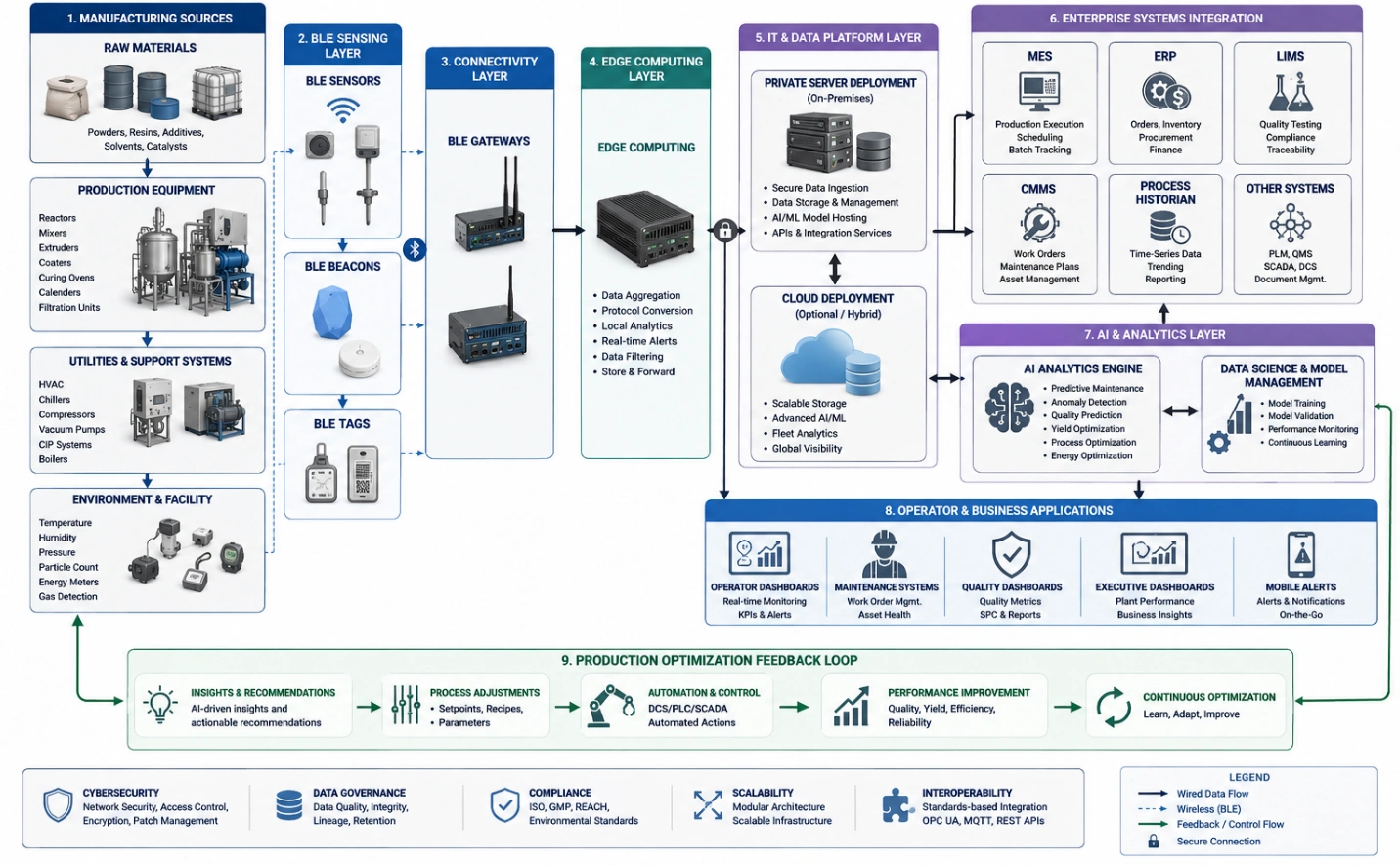
Alt Text: AI-enabled specialty materials manufacturing architecture with BLE, edge computing, enterprise systems, and AI analytics.
Understanding AI-Driven Specialty Materials Manufacturing with BLE-Based Industrial Data Collection
Specialty materials manufacturing differs significantly from commodity manufacturing because even minor variations in raw material characteristics, environmental conditions, reaction kinetics, curing profiles, mixing sequences, or handling procedures can affect final product performance. Production frequently involves batch processes, semi-continuous operations, precision dosing, controlled atmospheres, hazardous processing environments, and strict quality verification. Artificial Intelligence analyzes operational information collected throughout manufacturing to identify relationships that are difficult for conventional statistical methods to detect. BLE technology serves as an important data acquisition layer by monitoring equipment status, environmental conditions, mobile assets, production tools, operator activity, and inventory movement throughout manufacturing facilities. Unlike traditional automation systems that primarily execute predefined control logic, AI continuously evaluates changing operating conditions using machine learning, anomaly detection, predictive analytics, optimization algorithms, and, where appropriate, edge AI inference. This allows production teams to identify process drift before quality deviations occur, optimize production scheduling, anticipate equipment failures, and improve overall manufacturing efficiency. Typical AI objectives within specialty materials manufacturing include:
- Predicting batch quality before production completion
- Detecting abnormal equipment behavior
- Optimizing raw material consumption
- Improving formulation consistency
- Monitoring environmental stability
- Reducing process variability
- Predicting maintenance requirements
- Supporting operator decision-making
- Improving Overall Equipment Effectiveness (OEE)
- Enhancing end-to-end production traceability
BLE devices contribute continuous contextual information that complements industrial instrumentation already installed within process equipment, enabling AI systems to understand operational conditions beyond fixed production assets.
Why AI Is Transforming Specialty Materials Manufacturing
Manufacturers face increasing pressure to produce higher-performance materials while reducing operating costs, improving sustainability, and maintaining strict compliance with customer specifications and regulatory requirements. Many specialty materials are produced using expensive precursor chemicals, engineered additives, catalysts, rare materials, or proprietary formulations where production losses have significant financial consequences. Small deviations during mixing, reaction control, coating, drying, extrusion, milling, sintering, impregnation, or curing may result in rejected batches worth hundreds of thousands of dollars. Artificial Intelligence addresses these challenges by continuously analyzing operational variables including:
- Environmental temperature
- Relative humidity
- Equipment utilization
- Operator workflows
- Material handling duration
- Batch processing time
- Equipment vibration
- Mobile asset location
- Production sequencing
- Historical quality records
- Laboratory testing results
- Maintenance history
- Utility consumption
Machine learning models identify subtle correlations between these variables and downstream quality outcomes, enabling manufacturers to intervene before defects propagate through production. For facilities manufacturing aerospace composites, semiconductor materials, specialty coatings, battery components, optical materials, pharmaceutical excipients, engineered polymers, or advanced ceramics, these predictive capabilities significantly reduce scrap while improving customer confidence in product consistency. GAO supplies BLE hardware that enables continuous industrial data collection supporting these AI-driven manufacturing improvements across diverse specialty materials operations.
AI-Driven Specialty Materials Manufacturing Workflow Diagram for BLE Data Collection, Predictive Analytics, and Process Optimization
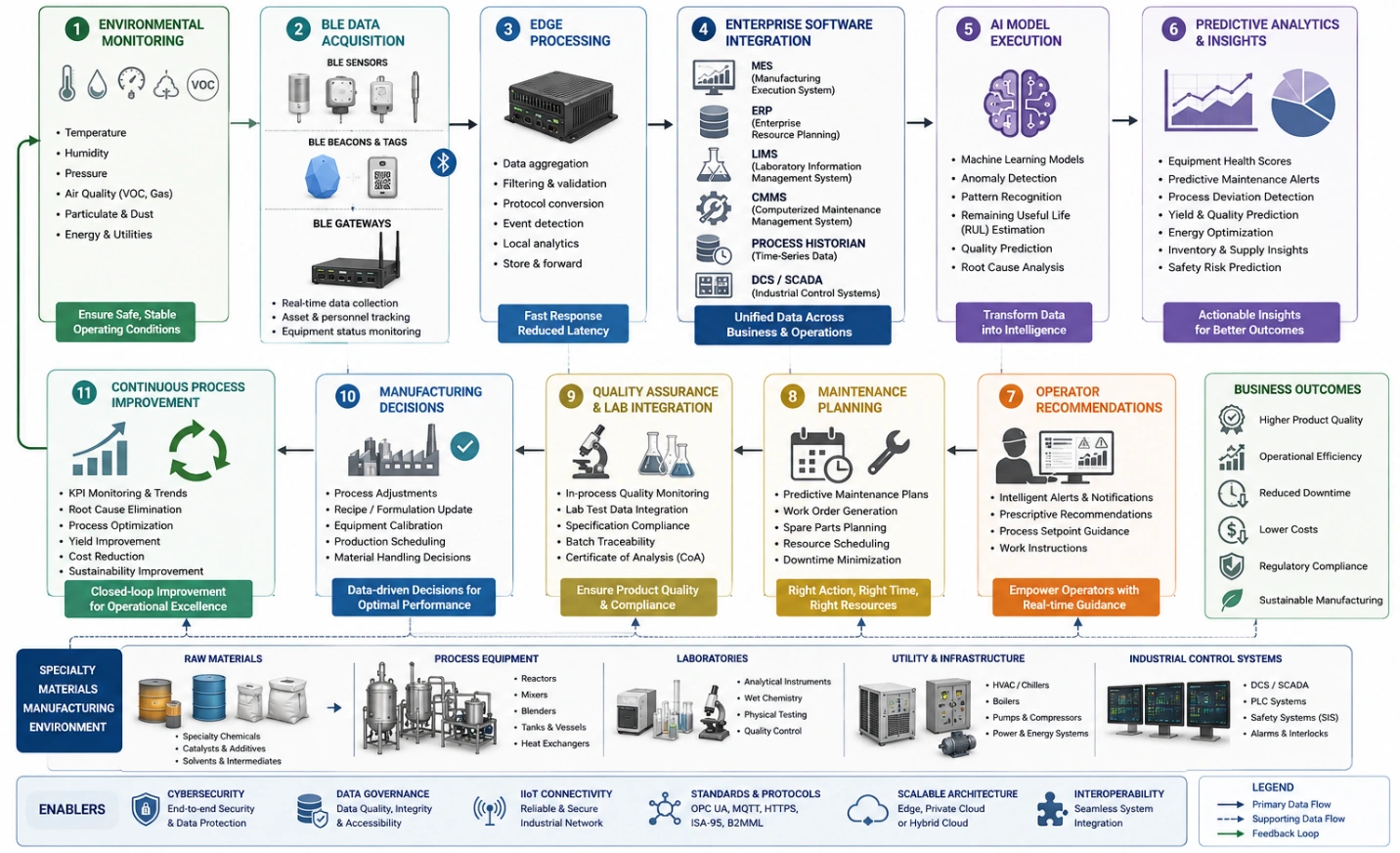
Alt Text: Workflow diagram of AI-enabled specialty materials manufacturing from BLE sensing to AI analytics and continuous process optimization.
Operational Challenges Unique to Specialty Materials Manufacturing
Specialty materials facilities present operational complexities that differ substantially from conventional manufacturing environments.
Batch-to-Batch Process Variability
Small differences in:
- Raw material moisture
- Particle size distribution
- Chemical purity
- Mixing energy
- Reactor residence time
- Temperature profiles
- Cooling rates
- Operator procedures
may influence finished product characteristics. AI continuously evaluates production history to recognize conditions associated with successful production runs.
Environmental Stability Requirements
Many specialty materials require tightly controlled production environments. Examples include:
- Electronic chemicals requiring ultra-clean processing
- Composite prepreg manufacturing requiring humidity control
- Battery materials sensitive to moisture
- Adhesive manufacturing requiring controlled curing conditions
- Optical coatings requiring contamination-free production
- Nanomaterial synthesis requiring stable reaction environments
BLE environmental sensors distributed throughout production areas provide granular measurements that supplement building management systems, allowing AI to detect localized environmental changes before product quality is affected.
Complex Material Traceability
Manufacturers frequently manage thousands of:
- Raw material containers
- Intermediate batches
- Process vessels
- Portable mixers
- Mobile reactors
- Transport carts
- Laboratory samples
- Quality control specimens
- Finished product containers
BLE beacons improve visibility of these mobile assets while AI reconstructs complete production histories supporting regulatory compliance and customer documentation.
Equipment Reliability
Critical production assets include:
- High-shear mixers
- Twin-screw extruders
- Ball mills
- Spray dryers
- Fluidized bed processors
- Continuous reactors
- Vacuum dryers
- Ribbon blenders
- Attrition mills
- Calenders
- Coating lines
- Thermal curing ovens
Unexpected downtime disrupts tightly coordinated production schedules and may invalidate partially completed batches. AI combines operational history with BLE sensor measurements to recognize early indicators of mechanical degradation, enabling predictive maintenance strategies that reduce unplanned outages.
Workforce Knowledge Retention
Experienced process engineers often recognize subtle production anomalies through years of operational experience. AI assists less experienced operators by identifying conditions similar to historical quality events and recommending corrective actions based on prior production outcomes. BLE-enabled operator location awareness can also provide contextual information regarding manual production activities while respecting organizational privacy policies.
AI Applications Across Specialty Materials Manufacturing Operations
Artificial intelligence delivers value throughout the complete manufacturing lifecycle rather than within isolated production stages.
Intelligent Raw Material Management
Incoming specialty chemicals, powders, catalysts, additives, solvents, fillers, pigments, reinforcing fibers, and binders often require controlled storage before production. AI evaluates:
- Inventory turnover
- Storage conditions
- Material aging
- Environmental exposure
- Supplier variability
- Consumption forecasting
BLE sensors continuously monitor warehouse temperature and humidity, while BLE beacons assist in locating mobile material containers and handling equipment.
AI-Assisted Production Scheduling
Production scheduling must consider:
- Equipment cleaning requirements
- Cross-contamination risks
- Batch sequencing
- Utility availability
- Reactor capacity
- Laboratory release timing
- Maintenance windows
- Operator availability
AI scheduling models optimize production sequencing while minimizing cleaning cycles, changeovers, and idle equipment. BLE location information improves visibility into equipment readiness and material availability.
Process Optimization
Machine learning models analyze thousands of production variables to determine operating conditions associated with superior product performance. Optimization opportunities include:
- Mixing duration
- Reaction temperatures
- Heating profiles
- Cooling rates
- Extrusion parameters
- Coating thickness
- Drying time
- Material transfer timing
- Energy consumption
- Equipment utilization
Rather than relying solely on engineering setpoints, AI continuously recommends operational adjustments based on historical manufacturing performance.
Intelligent Quality Prediction
Traditional quality verification often occurs after production completion through laboratory testing. AI supplements laboratory analysis by predicting likely quality outcomes during manufacturing using:
- Historical batch records
- Environmental measurements
- Equipment operating parameters
- Production timing
- Operator actions
- Maintenance history
- Material genealogy
Earlier prediction reduces rework, minimizes waste, and improves production planning.
Predictive Maintenance
Instead of servicing equipment according to fixed schedules, AI predicts maintenance needs using:
- Equipment vibration
- Temperature trends
- Operating hours
- Utilization patterns
- Historical failures
- Environmental exposure
- Production workload
BLE vibration and condition-monitoring sensors provide additional operational context for rotating machinery, mixers, conveyors, pumps, and auxiliary equipment.
End-to-End Operational Workflow for AI-Driven Specialty Materials Manufacturing
Successful AI deployment in specialty materials manufacturing depends on reliable operational data flowing from production equipment, environmental monitoring devices, laboratory systems, and enterprise software into AI models that generate actionable recommendations. Rather than functioning as a standalone solution, AI becomes an intelligent decision-support layer integrated throughout production, quality assurance, maintenance, and supply chain operations. The workflow below reflects a typical implementation found in advanced specialty materials facilities producing engineered polymers, battery materials, specialty chemicals, coatings, composites, adhesives, electronic materials, catalysts, and advanced ceramics.
Production Data Acquisition
The process begins with continuous collection of production data from multiple operational sources. Typical data sources include:
- Distributed control systems (DCS)
- Programmable logic controllers (PLCs)
- Supervisory Control and Data Acquisition (SCADA) software
- Process analyzers
- Flowmeters
- Pressure transmitters
- Temperature sensors
- pH analyzers
- Conductivity analyzers
- Spectrometers
- Laboratory instruments
- Industrial weighing systems
- Vision inspection systems
- Environmental monitoring stations
BLE gateways aggregate information from BLE beacons and BLE sensors deployed across manufacturing areas. Typical monitored assets include:
- Mobile process vessels
- Intermediate bulk containers (IBCs)
- Drum storage areas
- Portable mixers
- Laboratory carts
- Forklifts
- Maintenance tools
- Calibration instruments
- Utility carts
- Environmental monitoring points
Rather than replacing industrial instrumentation, BLE complements existing automation systems by capturing operational context associated with mobile assets and dynamic production environments that conventional wired systems cannot easily monitor. GAO provides industrial-grade BLE gateways, sensors, and beacon solutions designed to support dependable data collection in manufacturing environments where production continuity and data integrity are critical.
Edge Processing and Industrial Intelligence
Not every manufacturing decision should depend on cloud connectivity. Specialty materials production often requires deterministic response times, particularly where process deviations may rapidly affect product quality. Edge computing systems therefore perform several important functions before forwarding selected information to centralized AI software. Typical edge processing activities include:
- Data validation
- Signal filtering
- Noise reduction
- Timestamp synchronization
- Sensor health verification
- Local anomaly detection
- Event prioritization
- Temporary buffering during network interruptions
Edge AI models may perform immediate inference for time-sensitive events such as:
- Equipment overheating
- Excessive vibration
- Unauthorized material movement
- Environmental excursions
- Worker safety alerts
- Production bottlenecks
Only relevant operational events or summarized datasets are transmitted to higher-level AI systems, reducing bandwidth requirements while improving response times. Facilities producing moisture-sensitive battery materials or high-value semiconductor chemicals particularly benefit from local processing because rapid environmental deviations require immediate corrective actions.
Enterprise Data Integration
AI produces meaningful operational insights only when manufacturing information is evaluated alongside business data. Typical enterprise software integrated into specialty materials manufacturing includes:
Manufacturing Execution Systems (MES)
MES software manages:
- Batch records
- Production scheduling
- Work instructions
- Equipment status
- Production genealogy
- Electronic batch documentation
- Operator workflows
AI combines MES production history with BLE-generated operational context to identify conditions associated with optimal manufacturing performance.
Enterprise Resource Planning (ERP)
ERP software contributes information including:
- Raw material inventory
- Procurement
- Supplier performance
- Production orders
- Customer demand
- Cost accounting
- Warehouse operations
AI forecasting models use ERP data to optimize inventory levels while minimizing shortages of high-value specialty chemicals and engineered raw materials.
Laboratory Information Management Systems (LIMS)
Quality laboratories play an essential role in specialty materials manufacturing. LIMS software manages:
- Sample registration
- Analytical test results
- Certificates of analysis
- Stability testing
- Product release
- Laboratory workflows
AI compares laboratory results with production conditions collected throughout manufacturing, allowing future quality predictions before laboratory testing is completed.
Computerized Maintenance Management Systems (CMMS)
Maintenance software contributes:
- Equipment history
- Spare parts inventory
- Inspection records
- Work orders
- Failure history
- Technician observations
AI correlates equipment health with manufacturing performance to improve predictive maintenance scheduling.
Process Historians
Industrial historians continuously archive:
- Process variables
- Equipment operating conditions
- Alarm history
- Production trends
- Utility consumption
Historical datasets provide training data for machine learning models that recognize production patterns associated with superior product quality.
AI Decision-Making and Operational Optimization
Following data integration, AI software evaluates manufacturing conditions using multiple analytical methods. Common AI techniques include:
- Supervised machine learning
- Unsupervised clustering
- Time-series forecasting
- Predictive analytics
- Statistical process monitoring
- Deep learning
- Reinforcement learning for process optimization
- Anomaly detection
- Remaining useful life estimation
- Bayesian optimization
Instead of relying on isolated variables, AI evaluates relationships among hundreds or thousands of production parameters simultaneously. Examples include:
- Reactor temperature combined with humidity trends
- Mixer vibration combined with formulation changes
- Operator shift patterns combined with quality outcomes
- Equipment utilization combined with maintenance history
- Environmental conditions combined with laboratory results
- Material storage duration combined with production yield
These relationships often remain invisible using traditional statistical analysis alone.
AI-Driven BLE Decision-Making Block Diagram for Specialty Materials Manufacturing and Enterprise System Integration
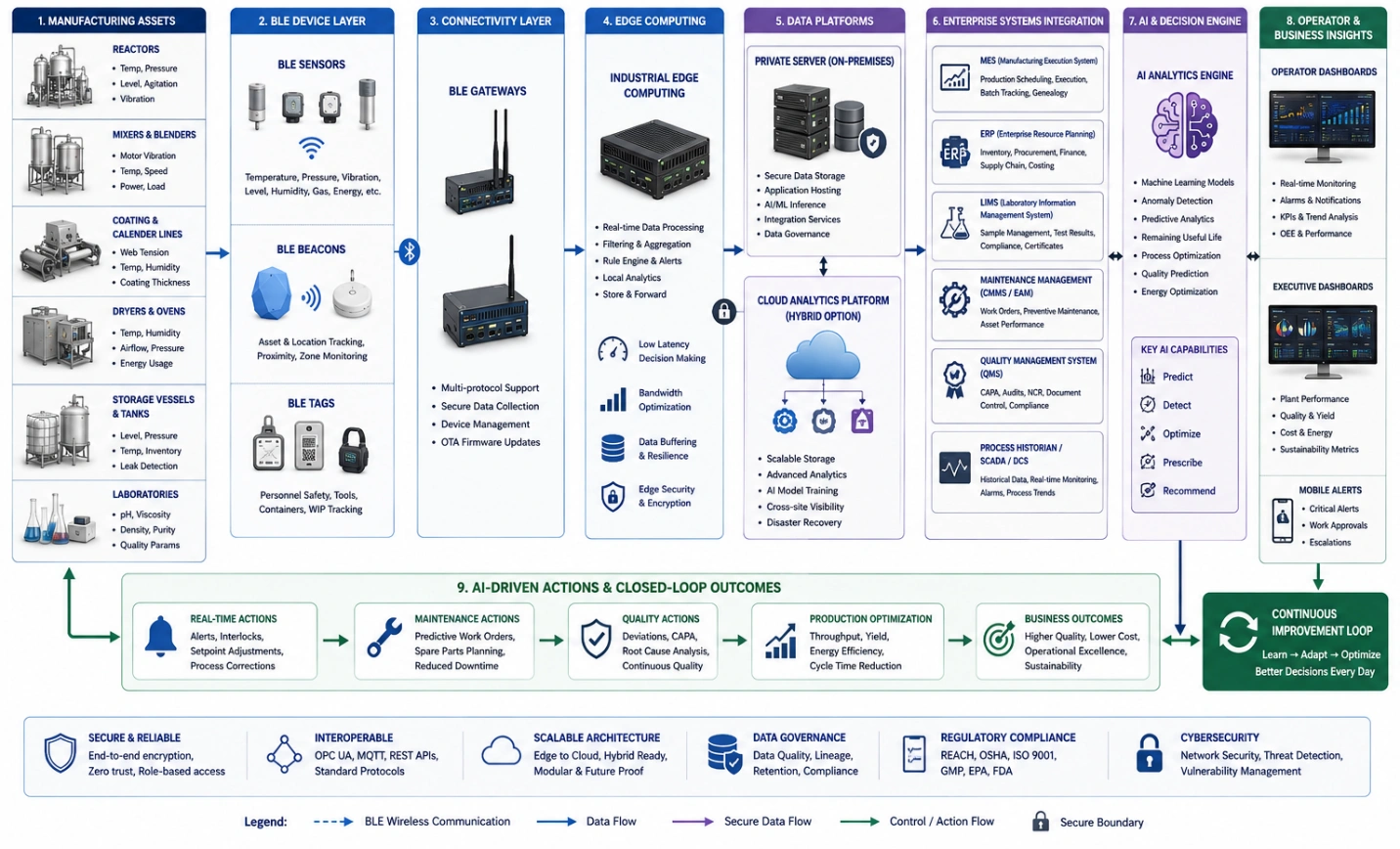
Alt Text: Block diagram of AI-driven BLE architecture for specialty materials manufacturing with enterprise system integration.
Intelligent Business Actions
Once AI identifies actionable insights, manufacturing personnel can respond through existing operational procedures rather than replacing established workflows. Examples include:
Production Operations
- Adjust formulation parameters
- Modify reactor residence time
- Optimize mixing duration
- Balance production workloads
- Reduce equipment idle time
Quality Assurance
- Increase inspection frequency
- Initiate additional laboratory testing
- Hold suspect batches
- Verify environmental compliance
- Review process deviations
Maintenance
- Schedule equipment inspection
- Replace worn components
- Perform predictive lubrication
- Calibrate process instruments
- Prioritize maintenance work orders
Supply Chain
- Expedite critical raw materials
- Adjust inventory policies
- Improve supplier qualification
- Optimize warehouse allocation
These recommendations support engineering decision-making while maintaining appropriate human oversight for critical production processes.
Engineering Considerations for AI and BLE Deployment
Successful implementation depends less on AI algorithms than on disciplined engineering practices established before deployment.
Sensor Placement Strategy
Sensor placement directly influences AI accuracy. Engineering teams should evaluate:
- Thermal gradients
- Airflow patterns
- Electromagnetic interference
- Chemical exposure
- Washdown requirements
- Hazardous area classifications
- Equipment accessibility
- Maintenance requirements
BLE environmental sensors should supplement existing process instrumentation rather than duplicate measurements already available through automation systems.
Wireless Coverage Planning
Reliable BLE communication requires detailed radio-frequency site surveys. Factors affecting coverage include:
- Reinforced concrete walls
- Stainless-steel reactors
- Pipe racks
- Storage tanks
- Bulk chemical containers
- Rotating machinery
- Electrical cabinets
- Production buildings
Proper gateway placement minimizes communication blind spots while maintaining network reliability.
Cybersecurity
Specialty materials manufacturers frequently protect proprietary formulations and confidential production methods. Recommended security measures include:
- Device authentication
- Role-based access control
- Certificate management
- Secure firmware updates
- Encrypted communications
- Multi-factor authentication
- Network segmentation
- Security event monitoring
- Audit logging
AI software should follow established industrial cybersecurity guidance while integrating with organizational identity management systems. GAO supports organizations implementing secure industrial IoT hardware that aligns with broader cybersecurity strategies adopted within modern manufacturing environments.
Data Quality Governance
AI models cannot compensate for poor-quality operational data. Successful deployments establish governance procedures covering:
- Sensor calibration
- Data validation
- Missing value handling
- Metadata management
- Equipment identification
- Time synchronization
- Data retention
- Version control
- Model monitoring
Regular validation ensures machine learning models continue producing reliable recommendations as production conditions evolve.
Cloud and Private Server Deployment Considerations
Specialty materials manufacturers generally adopt one of two deployment approaches depending on operational requirements, cybersecurity policies, latency expectations, and regulatory obligations.
Cloud-Hosted Deployment
Cloud-hosted software is well suited for organizations operating multiple manufacturing sites or requiring centralized analytics across geographically distributed facilities. Advantages include:
- Centralized AI model management
- Fleet-wide production benchmarking
- Elastic computing resources for machine learning workloads
- Simplified software updates
- Enterprise-wide reporting
- Cross-site predictive maintenance analysis
- Consolidated dashboards for executive and operations teams
This deployment model is particularly valuable for manufacturers seeking standardized reporting across multiple plants while minimizing internal infrastructure management.
Private Server Deployment
Many specialty materials manufacturers prefer software deployed on customer-managed servers located within private data centers, factory server rooms, or edge computing environments. Typical reasons include:
- Low-latency process monitoring
- Intellectual property protection
- Compliance with internal cybersecurity policies
- Operation during intermittent internet connectivity
- Integration with legacy manufacturing systems
- Control over software lifecycle and maintenance schedules
Private server deployments are especially appropriate where proprietary formulations, sensitive production recipes, or export-controlled manufacturing data must remain within organizational boundaries. Hybrid implementations are also common, with time-critical analytics executed on private servers while aggregated operational data is selectively synchronized to cloud environments for long-term analysis and enterprise reporting.
Cloud vs. Private Server Deployment Comparison for AI-Enabled Specialty Materials Manufacturing
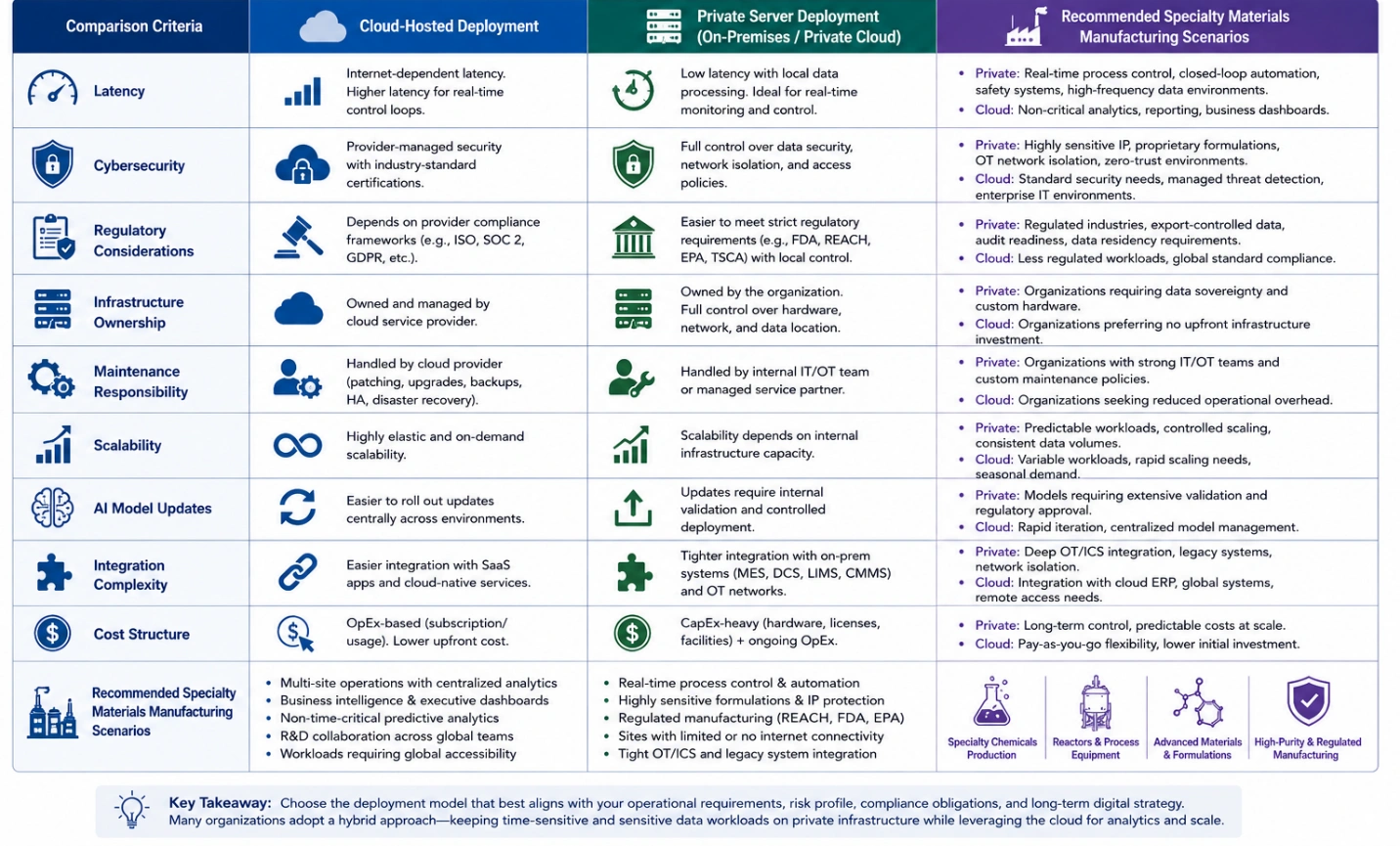
Alt Text: Comparison table of cloud and private server deployments for AI-enabled specialty materials manufacturing systems.
BLE Technology Stack Supporting AI-Driven Specialty Materials Manufacturing
Artificial Intelligence delivers measurable value in specialty materials manufacturing only when supported by a dependable industrial data collection system. Bluetooth Low Energy (BLE) provides an efficient wireless layer for monitoring mobile assets, environmental conditions, equipment status, and operator workflows that are difficult to capture using fixed automation systems alone. Within specialty materials plants, BLE complements existing Distributed Control Systems (DCS), Programmable Logic Controllers (PLCs), and Supervisory Control and Data Acquisition (SCADA) software by extending visibility beyond wired instrumentation. Rather than functioning as the primary control network, BLE serves as an operational intelligence layer that continuously captures contextual information for AI models. Typical deployments include BLE gateways installed throughout production buildings, BLE beacons attached to mobile assets, and BLE sensors monitoring environmental and equipment conditions. GAO supplies industrial BLE hardware designed for reliable operation in demanding manufacturing environments where dependable wireless communication and long service life are essential.
BLE Gateways
BLE gateways act as aggregation points between wireless field devices and enterprise software. They receive data from nearby BLE beacons and sensors, perform preliminary filtering or buffering where appropriate, and forward validated information to edge servers, private servers, or cloud-hosted software. Common deployment locations include:
- Reactor halls
- Mixing rooms
- Coating lines
- Drying areas
- Warehouse aisles
- Finished goods storage
- Quality control laboratories
- Utility rooms
- Packaging lines
- Maintenance workshops
Engineering considerations for gateway deployment include:
- Radio-frequency site surveys
- Coverage overlap for redundancy
- Power availability
- Ethernet or Wi-Fi backhaul
- Electromagnetic interference from industrial equipment
- Environmental protection ratings
- Hazardous area classifications where applicable
Proper gateway placement improves data continuity while minimizing communication blind spots caused by stainless-steel vessels, pipe racks, storage tanks, and reinforced concrete structures commonly found in specialty materials facilities.
BLE Beacons
BLE beacons periodically transmit identifiers that enable real-time location awareness and asset visibility. Unlike active industrial controllers, beacons are optimized for low power consumption and long operational life, making them well suited for tracking mobile equipment and production resources. Typical assets equipped with BLE beacons include:
- Intermediate bulk containers (IBCs)
- Chemical drums
- Portable blending units
- Laboratory sample carts
- Forklifts
- Pallet jacks
- Mobile filtration systems
- Calibration equipment
- Maintenance toolkits
- Reusable shipping containers
- High-value molds
- Specialized production fixtures
AI software combines beacon-derived location history with production schedules and equipment utilization data to identify inefficiencies such as excessive transport time, idle assets, or workflow bottlenecks.
BLE Sensors
BLE sensors extend operational visibility by measuring conditions that influence product quality and equipment reliability. Depending on the application, sensors may monitor:
- Ambient temperature
- Relative humidity
- Vibration
- Surface temperature
- Differential pressure
- Light exposure
- Door status
- Equipment movement
- Air quality
- Shock events
Examples in specialty materials manufacturing include:
- Monitoring humidity in battery material production rooms
- Tracking vibration on ribbon blenders and ball mills
- Measuring storage conditions for moisture-sensitive additives
- Detecting temperature excursions in curing areas
- Supervising environmental stability in clean processing zones
Sensor selection should account for measurement accuracy, calibration intervals, battery life, ingress protection (IP) ratings, and compatibility with existing maintenance procedures.
Supporting Hardware and Industrial Infrastructure
BLE devices operate as part of a broader industrial infrastructure that supports reliable data acquisition and AI-driven decision-making. Key supporting components include:
- Industrial Ethernet switches
- Managed network appliances
- Edge computing servers
- Industrial PCs
- Wireless access points
- Time synchronization services (NTP/PTP)
- Redundant power supplies
- Uninterruptible Power Supplies (UPS)
- Secure firewall appliances
- Environmental enclosures
- Industrial gateways for protocol translation
Where continuous operation is critical, redundant communication paths and backup power help maintain data availability during network disruptions or maintenance activities.
AI Models Used in Specialty Materials Manufacturing
Different manufacturing objectives require different AI techniques. Rather than relying on a single model, production systems often combine multiple analytical approaches. Common AI methods include:
Supervised Machine Learning
Uses historical production and quality data to predict outcomes such as:
- Batch acceptance
- Product viscosity
- Mechanical properties
- Yield
- Moisture content
- Coating thickness
Algorithms may include Random Forests, Gradient Boosting Machines, and Neural Networks, depending on the complexity of the process and available training data.
Unsupervised Learning
Identifies hidden patterns without predefined labels. Typical applications include:
- Batch clustering
- Process drift detection
- Supplier variability analysis
- Raw material characterization
- Identification of abnormal production behavior
Time-Series Forecasting
Analyzes sequential operational data to predict:
- Equipment degradation
- Utility demand
- Environmental trends
- Production throughput
- Inventory consumption
These forecasts support maintenance planning and production scheduling.
Anomaly Detection
Continuously monitors operating conditions to identify deviations that may indicate:
- Equipment malfunction
- Sensor failure
- Process instability
- Environmental excursions
- Material handling errors
Early detection enables corrective action before product quality is compromised.
Edge AI Inference
For latency-sensitive applications, lightweight AI models execute directly on edge computing devices. Typical use cases include:
- Immediate environmental alerts
- Equipment condition monitoring
- Worker safety notifications
- Unauthorized asset movement
- Local process anomaly detection
Executing inference near the production process reduces response times and limits dependence on external network connectivity.
Communication Protocols and System Interoperability
BLE integrates with established industrial communication standards through gateways and middleware, enabling AI software to consume data from diverse operational sources. Frequently used protocols include:
- MQTT for lightweight telemetry
- OPC UA for secure industrial interoperability
- Modbus TCP for legacy equipment integration
- EtherNet/IP where compatible with existing automation systems
- PROFINET through appropriate gateway interfaces
- HTTPS and REST APIs for enterprise software connectivity
- AMQP for message-oriented integration in larger distributed systems
Protocol selection depends on existing plant infrastructure, cybersecurity requirements, latency expectations, and interoperability with MES, ERP, LIMS, CMMS, and process historians. By adhering to open communication standards where practical, manufacturers can reduce integration complexity, extend the useful life of existing automation investments, and provide AI applications with consistent, high-quality operational data.
Cybersecurity and Secure Industrial AI Deployment
Cybersecurity should be incorporated into AI-enabled specialty materials manufacturing from the earliest design stages rather than added after commissioning. Production facilities often contain proprietary formulations, confidential processing parameters, customer-specific recipes, intellectual property, and regulated manufacturing records that require comprehensive protection. BLE devices represent only one component of the overall security strategy. Secure deployment requires coordinated protection across wireless devices, industrial networks, edge computing systems, enterprise software, identity management, and operational procedures. Recommended engineering practices include:
- Mutual authentication between BLE devices and gateways
- AES-based encrypted BLE communications where supported
- Role-based access control (RBAC)
- Multi-factor authentication (MFA) for administrative functions
- Secure boot for edge computing devices
- Digitally signed firmware updates
- Certificate lifecycle management
- Network segmentation between operational technology (OT) and information technology (IT)
- Continuous security event monitoring
- Centralized audit logging
- Periodic vulnerability assessments
- Backup and disaster recovery planning
Facilities producing electronic materials, battery chemicals, aerospace composites, or defense-related specialty materials frequently adopt a zero-trust security model in which every device, user, and software component must be authenticated before accessing operational resources. GAO works with organizations deploying BLE hardware within broader industrial cybersecurity programs, ensuring wireless infrastructure aligns with existing IT and OT security policies.
Cloud Software and Private Server Software
Selecting the appropriate software deployment model depends on manufacturing objectives, cybersecurity requirements, regulatory obligations, available IT resources, and operational latency.
Cloud-Hosted Software
Cloud-hosted AI software is well suited for manufacturers operating multiple production facilities or requiring centralized visibility across geographically distributed plants. Typical capabilities include:
- Centralized AI model training
- Fleet-wide asset monitoring
- Cross-site production benchmarking
- Predictive maintenance across multiple facilities
- Enterprise reporting and dashboards
- Long-term historical data storage
- Simplified software maintenance
- Elastic computing resources for large-scale machine learning
Cloud deployments are particularly effective when engineering teams require collaboration across research laboratories, pilot plants, and commercial production sites. Potential considerations include:
- Internet connectivity requirements
- Data residency policies
- Cybersecurity governance
- Latency for time-sensitive applications
- Integration with legacy production systems
Private Server Software
Many specialty materials manufacturers deploy AI software on customer-managed servers located in factory server rooms, private data centers, or regional computing facilities. Private server deployments typically provide:
- Low-latency processing
- Greater control of proprietary manufacturing data
- Simplified compliance with internal cybersecurity policies
- Local execution of AI inference
- Integration with legacy automation systems
- Independence from continuous internet connectivity
Organizations manufacturing export-controlled products, proprietary catalyst formulations, semiconductor chemicals, or defense-related composite materials often prefer private server deployments because sensitive production information remains under organizational control.
Hybrid Deployment Strategy
Many facilities combine both deployment models. Typical workload distribution includes:
Private Server
- Real-time process monitoring
- Immediate anomaly detection
- Equipment condition monitoring
- Operator decision support
- Local historian integration
Cloud
- Enterprise analytics
- Multi-site benchmarking
- Long-term machine learning model training
- Corporate sustainability reporting
- Supply chain optimization
- Executive dashboards
This hybrid approach balances operational responsiveness with enterprise-wide analytical capabilities.
Key Technical Capabilities Delivered by AI with BLE
The combination of AI and BLE-enabled operational data provides measurable improvements throughout specialty materials manufacturing. BLE contributes contextual information from mobile assets and environmental monitoring, while AI transforms these data into actionable operational intelligence.
Predictive Quality Assurance
Rather than waiting for laboratory confirmation after production is complete, AI evaluates manufacturing conditions throughout each batch. Typical prediction targets include:
- Product viscosity
- Particle size distribution
- Surface finish
- Cure consistency
- Coating adhesion
- Moisture content
- Density
- Mechanical performance
Earlier quality prediction enables production teams to adjust operating conditions before defects become irreversible.
Predictive Maintenance
Machine learning continuously evaluates equipment health using information such as:
- Vibration trends
- Equipment utilization
- Maintenance history
- Environmental exposure
- Temperature behavior
- Operating cycles
Benefits include:
- Reduced unplanned downtime
- Improved maintenance scheduling
- Longer equipment life
- Better spare parts planning
- Higher Overall Equipment Effectiveness (OEE)
Asset Visibility
BLE beacons improve visibility of mobile production assets that frequently move throughout manufacturing facilities. Examples include:
- Portable reactors
- Laboratory equipment
- Quality inspection carts
- Maintenance tools
- Bulk material containers
- Transport carts
- Calibration equipment
AI analyzes historical movement patterns to identify:
- Asset underutilization
- Congested production areas
- Excessive transport distances
- Equipment availability constraints
Environmental Intelligence
Environmental stability directly affects numerous specialty materials. AI evaluates BLE sensor data alongside process variables to identify conditions that increase production risk. Applications include:
- Humidity monitoring for lithium battery materials
- Temperature stability during adhesive curing
- Cleanroom environmental monitoring
- Controlled storage for specialty polymers
- Solvent storage condition monitoring
Continuous environmental awareness reduces product variability while improving regulatory compliance.
Production Scheduling Optimization
Manufacturing schedules must balance:
- Equipment availability
- Cleaning requirements
- Batch sequencing
- Utility capacity
- Laboratory testing
- Maintenance windows
- Workforce availability
AI continuously evaluates these constraints to recommend schedules that improve throughput while minimizing unnecessary equipment changeovers and idle time.
Energy Optimization
Specialty materials manufacturing frequently involves energy-intensive operations including:
- Thermal curing
- Drying
- Milling
- Mixing
- Vacuum processing
- Extrusion
- Heat treatment
AI identifies opportunities to reduce energy consumption without compromising product quality by correlating production parameters with historical energy performance.
Scalability and Future Expansion
Successful AI deployments are designed for incremental expansion rather than facility-wide implementation on the first day. Engineering teams typically begin with limited production areas before extending coverage across additional manufacturing operations. Common expansion sequence:
- Pilot production line
- Environmental monitoring
- Equipment condition monitoring
- Mobile asset tracking
- Multi-line deployment
- Plant-wide analytics
- Multi-site manufacturing optimization
This phased approach reduces implementation risk while allowing AI models to mature using production-specific data. GAO has supported organizations by supplying BLE hardware that can be expanded as manufacturing requirements evolve, helping customers protect their long-term infrastructure investments.
Practical Engineering Lessons
Experience from industrial deployments demonstrates several recurring implementation considerations. Recommended practices include:
- Define measurable business objectives before selecting AI models.
- Validate sensor accuracy before collecting training data.
- Involve production engineers during AI model development.
- Include laboratory personnel when correlating manufacturing variables with quality outcomes.
- Establish data governance policies before commissioning.
- Monitor model accuracy as formulations and production conditions evolve.
- Design wireless coverage using professional site surveys.
- Integrate AI recommendations into existing operational workflows rather than creating parallel decision processes.
- Continuously retrain machine learning models using newly validated production data.
Organizations that treat AI as a long-term operational capability rather than a one-time software project generally achieve more sustainable performance improvements.
Cloud vs. Private Server vs. Hybrid Deployment Decision Tree for AI-Enabled Specialty Materials Manufacturing
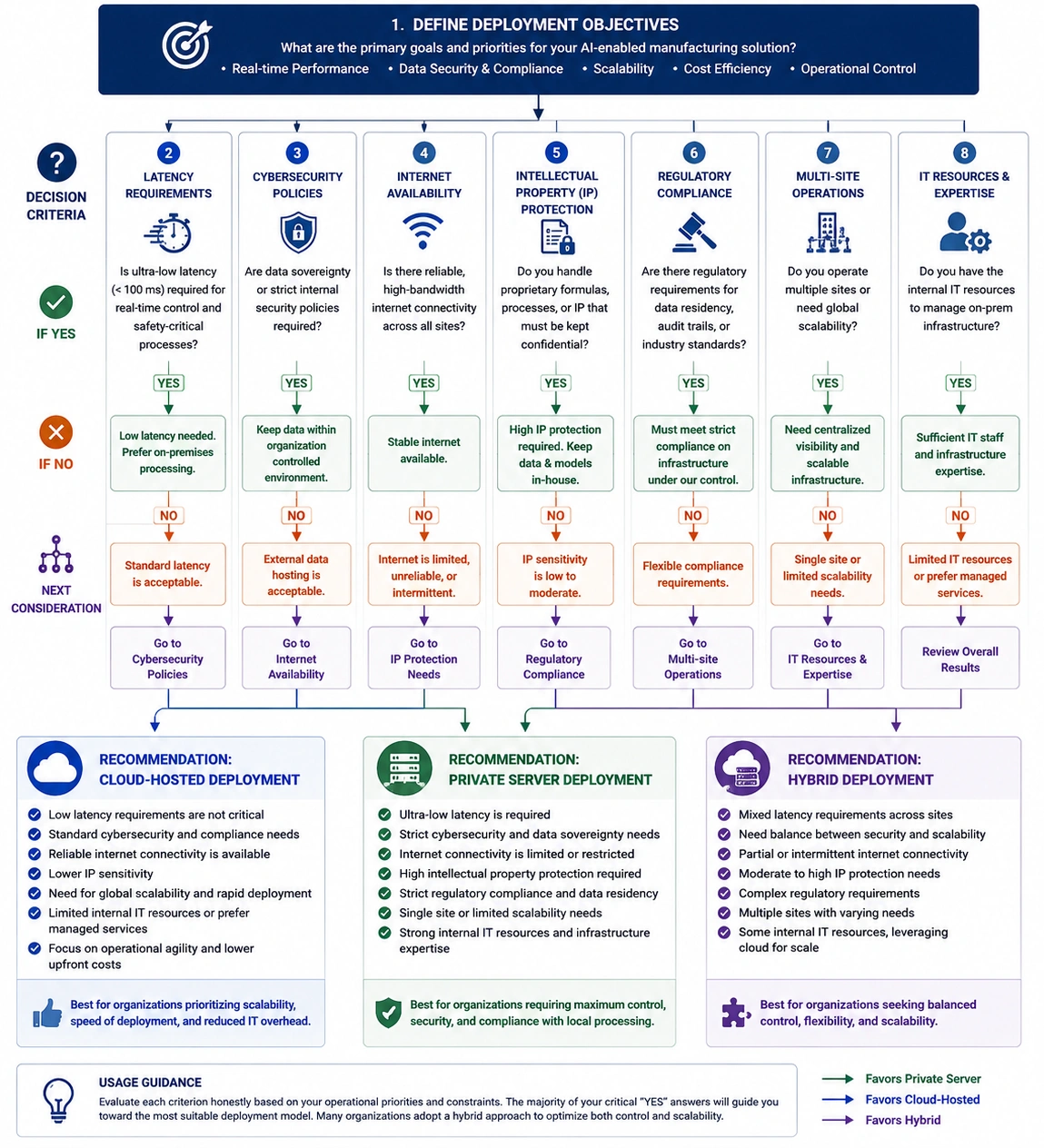
Alt Text: Decision tree comparing cloud, private server, and hybrid AI deployments for specialty materials manufacturing.
Implementation Recommendations for AI-Enabled Specialty Materials Manufacturing
Organizations implementing AI supported by BLE infrastructure achieve the best results when projects are aligned with measurable operational objectives rather than technology adoption alone. Specialty materials manufacturing involves tightly controlled formulations, demanding quality specifications, and complex production workflows. Consequently, implementation plans should be tailored to production processes, laboratory operations, maintenance practices, and regulatory requirements. Recommended implementation practices include:
- Establish baseline performance metrics before deployment, including Overall Equipment Effectiveness (OEE), First Pass Yield (FPY), batch cycle time, scrap rate, energy consumption, laboratory turnaround time, and mean time between failures (MTBF).
- Prioritize high-value production lines or critical unit operations, such as reactors, high-shear mixers, extrusion systems, coating lines, drying ovens, or clean processing environments, for initial pilot projects.
- Perform comprehensive radio frequency (RF) site surveys before installing BLE gateways to account for signal attenuation caused by stainless-steel vessels, structural steel, storage tanks, and reinforced concrete.
- Develop standardized naming conventions and asset identification strategies for equipment, mobile containers, laboratory instruments, and BLE devices to simplify integration with Manufacturing Execution Systems (MES), Enterprise Resource Planning (ERP), and Laboratory Information Management Systems (LIMS).
- Establish data governance policies covering sensor calibration, timestamp synchronization, metadata management, retention policies, and AI model validation.
- Validate AI recommendations through controlled production trials before incorporating them into standard operating procedures.
- Define cybersecurity responsibilities across operational technology (OT), information technology (IT), engineering, and production teams to ensure secure lifecycle management.
- Plan for periodic retraining of machine learning models as raw materials, production recipes, equipment, and operating conditions evolve over time.
GAO has supported manufacturers throughout North America by supplying industrial BLE hardware and technical expertise that enables dependable operational data collection, providing a strong foundation for AI-driven process optimization.
Expected Operational and Business Outcomes
When implemented using sound engineering practices and integrated with existing manufacturing systems, AI supported by BLE technology can improve multiple dimensions of specialty materials manufacturing performance.
Technical Improvements
- Improved batch-to-batch consistency through continuous process monitoring
- Earlier detection of process drift and abnormal operating conditions
- Enhanced equipment reliability using predictive maintenance
- Greater visibility of mobile production assets and laboratory resources
- More accurate environmental monitoring for moisture-sensitive and contamination-sensitive processes
- Better utilization of production equipment through AI-assisted scheduling
- Improved data quality for continuous process improvement initiatives
Operational Benefits
- Reduced unplanned downtime
- Lower production scrap and rework
- Shorter batch cycle times
- Faster investigation of production deviations
- Improved laboratory coordination with manufacturing operations
- Better inventory utilization for high-value specialty chemicals and engineered materials
- Reduced maintenance costs through condition-based servicing
Strategic Business Value
- Improved customer confidence through enhanced traceability
- Increased manufacturing flexibility for customized products
- Better support for regulatory audits and customer quality reviews
- Stronger protection of proprietary manufacturing knowledge through data-driven process management
- Improved sustainability by reducing material waste and optimizing energy consumption
- Greater scalability for multi-site manufacturing operations
These outcomes are achieved not by replacing experienced engineers or existing automation systems, but by augmenting operational decision-making with continuous data analysis and predictive insights.
Why Organizations Choose GAO for Industrial BLE and AIoT Solutions
Manufacturers evaluating AI-enabled operational intelligence require dependable hardware, practical engineering guidance, and long-term technical support. GAO contributes to these initiatives by supplying industrial BLE, RFID, and IoT hardware products and systems that integrate with existing manufacturing environments rather than requiring wholesale replacement of established automation investments. Headquartered in New York City and Toronto, Canada, GAO is recognized among the world’s leading B2B suppliers of BLE and RFID technologies. Together with GAO Research and GAO Tek, we form the GAO Group, serving organizations across the United States and Canada for more than three decades. Our customers include:
- Fortune 500 manufacturers
- Leading research and development organizations
- Universities and academic laboratories
- Federal, state, provincial, and municipal government agencies
- Engineering consultants
- System integrators
- Industrial automation professionals
Our continued investment in research and development, rigorous quality assurance processes, and expert remote and onsite technical support enables customers to deploy reliable industrial IoT solutions that meet demanding operational requirements.
Key Takeaways
Artificial Intelligence is reshaping specialty materials manufacturing by transforming operational data into predictive intelligence that improves production consistency, quality assurance, maintenance planning, and resource utilization. BLE gateways, BLE beacons, and BLE sensors extend visibility beyond fixed automation systems by capturing information from mobile assets, environmental conditions, and production workflows that would otherwise remain difficult to monitor. Successful deployments depend on disciplined engineering practices, including high-quality data acquisition, robust cybersecurity, careful wireless design, enterprise software integration, and continuous AI model validation. When these elements work together, manufacturers can reduce variability, improve throughput, strengthen traceability, and support continuous improvement initiatives across specialty chemicals, engineered polymers, battery materials, composites, coatings, advanced ceramics, catalysts, and other high-value specialty materials. Organizations planning AI-enabled manufacturing initiatives should evaluate their operational objectives, existing automation infrastructure, data quality, and integration requirements before selecting deployment strategies. GAO’s engineering expertise and industrial BLE product portfolio can help organizations build reliable data collection systems that support long-term AI adoption and operational excellence.
Building the Future of Industrial AI and IoT with Aperture Venture Studio and GAO
For more than three decades, GAO Group of Companies has invested extensively in the research and development of industrial BLE, RFID, and IoT technologies. As Artificial Intelligence has demonstrated significant value in specialty materials manufacturing, we have expanded our work in AIoT solutions that combine AI with BLE, RFID, industrial sensing, and connected manufacturing systems. To accelerate innovation in intelligent industrial solutions, we founded Aperture Venture Studio to help build and scale advanced AI and IoT technologies addressing complex manufacturing and industrial challenges. Aperture has attracted leading AI researchers, IoT engineers, experienced operational executives, influential investors, and established technology organizations committed to advancing industrial innovation. We also organize the Aperture Ventures Summit and TekSummit, bringing together technical professionals to discuss emerging developments in Artificial Intelligence, industrial IoT, wireless sensing, and connected manufacturing. These initiatives have helped foster vibrant technical communities focused on practical AI and IoT adoption. We welcome opportunities to collaborate with:
- Advisors
- Technical experts
- Employees
- Investors
- Customers interested in advancing industrial AI and IoT solutions
Final Call to Action
Whether your organization is optimizing specialty chemical production, improving composite manufacturing, enhancing battery material quality, or increasing traceability across advanced materials operations, AI supported by industrial BLE infrastructure can provide the operational visibility needed for data-driven decision-making. Contact GAO to learn how our BLE gateways, BLE beacons, BLE sensors, RFID technologies, and industrial IoT solutions can support your specialty materials manufacturing initiatives with dependable hardware, engineering expertise, and technical support tailored to complex process manufacturing environments.