
AI and RFID for Shopping Centers
Transforming Shopping Center Operations with AI-Driven RFID Intelligence
Shopping centers are evolving from traditional retail destinations into highly connected environments that combine physical retail, digital engagement, tenant operations, security systems, facility management, and customer experience technologies. AI-powered operational intelligence supported by RFID data is helping shopping center operators improve shopper experiences, optimize tenant performance, strengthen security, and enhance property management efficiency.
Modern shopping centers generate massive volumes of operational data from retail stores, customer traffic flows, parking facilities, maintenance activities, delivery operations, promotional events, and tenant services. RFID-enabled identification and tracking technologies provide real-time visibility into assets, personnel, merchandise movement, visitor patterns, and operational activities. Artificial intelligence transforms this information into actionable insights that support smarter decision-making.
Shopping center operators increasingly use AI-driven solutions to improve footfall analytics, optimize common-area utilization, automate asset tracking, reduce operational costs, enhance security monitoring, and improve retail tenant satisfaction. GAO has helped organizations implement RFID and IoT-based visibility solutions that support operational efficiency across commercial real estate environments throughout North America.
AI-Powered Shopping Center Intelligence with RFID Analytics
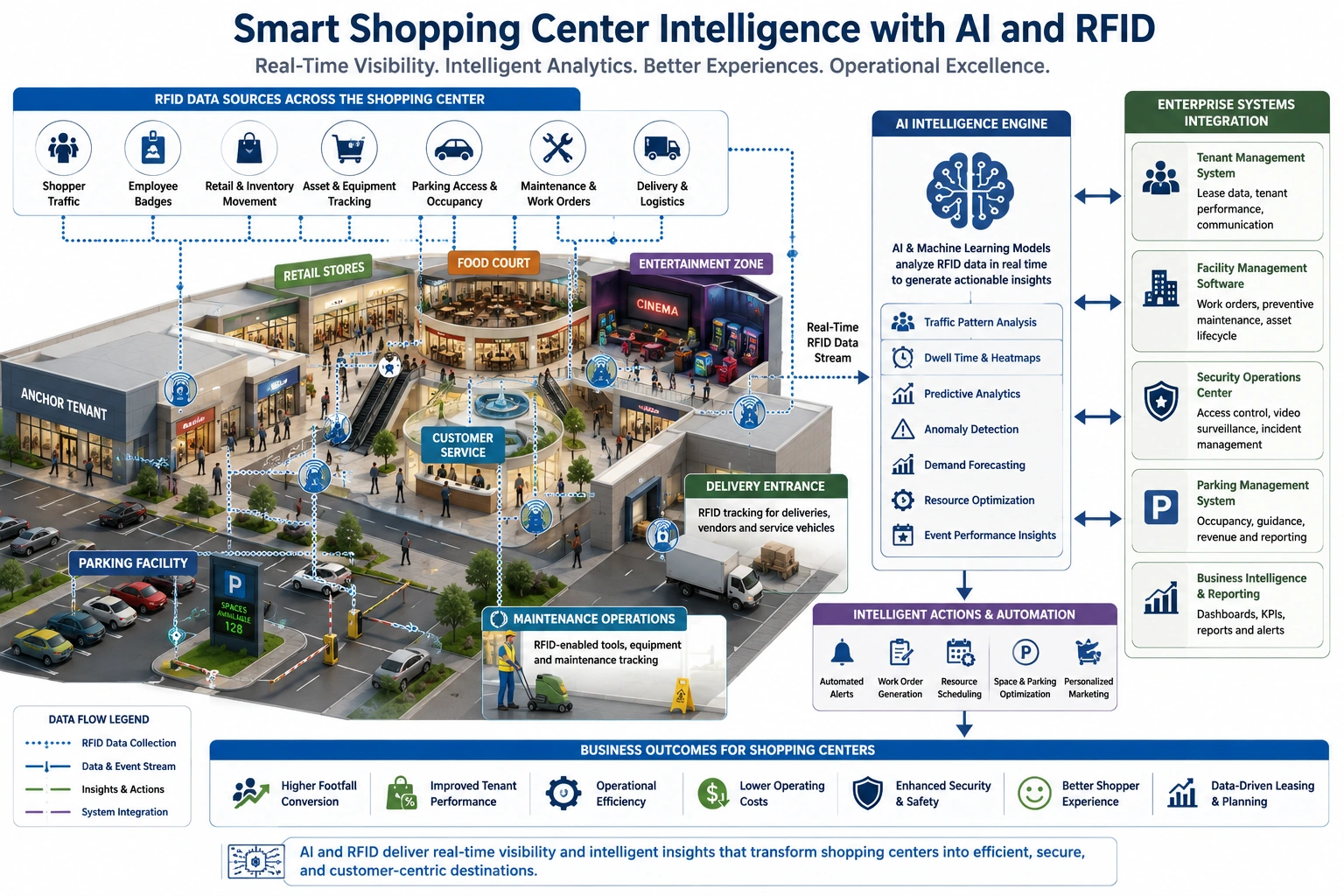
This infographic illustrates how RFID-generated data from shopper traffic, parking facilities, retail operations, maintenance activities, deliveries, and tenant services is collected throughout a shopping center and analyzed by AI systems. The resulting insights support security operations, facility management, parking optimization, tenant performance monitoring, operational automation, and business intelligence to improve shopping center efficiency and customer experience.
Understanding AI-Powered RFID Solutions for Shopping Centers
Shopping centers operate as complex environments involving retailers, property managers, facility teams, security personnel, maintenance contractors, logistics providers, and consumers. Operational efficiency depends on accurate visibility into activities occurring across the property.
RFID technology enables automatic identification and tracking of:
- Maintenance equipment
- Cleaning assets
- Security resources
- Inventory movement
- Delivery carts
- Tenant assets
- Parking access credentials
- Employee badges
- Service equipment
- Promotional assets
Artificial intelligence analyzes RFID-generated operational data to identify patterns, predict demand, detect anomalies, automate workflows, and improve decision-making.
Within shopping centers, AI-supported RFID systems help operators address several critical objectives:
- Shopper traffic analysis
- Retail zone performance monitoring
- Asset utilization tracking
- Security intelligence
- Parking optimization
- Tenant operations visibility
- Maintenance planning
- Event management
- Delivery coordination
- Energy efficiency initiatives
RFID serves as a critical data acquisition mechanism, while AI converts operational data into business intelligence that improves shopping center performance.
Operational Challenges Facing Modern Shopping Centers
Shopping centers face increasingly complex operational challenges driven by changing consumer behavior, omnichannel retail models, and rising customer expectations.
Limited Visibility into Shopper Traffic Patterns
Shopping center managers often struggle to accurately understand:
- Visitor flow patterns
- Peak traffic periods
- Zone popularity
- Dwell times
- Seasonal variations
- Event-driven traffic behavior
Without accurate visibility, tenant planning and operational optimization become difficult.
AI-powered RFID data analytics help reveal actionable shopper movement insights.
Asset Management Complexity
Large shopping centers manage thousands of operational assets across extensive properties.
These may include:
- Cleaning equipment
- Security devices
- Maintenance tools
- Utility equipment
- Digital signage assets
- Event infrastructure
- Emergency response equipment
Manual tracking processes often result in inefficiencies and asset loss.
Security and Public Safety Risks
Shopping centers must manage:
- Unauthorized access
- After-hours activities
- Suspicious behavior
- Crowd management concerns
- Emergency response coordination
AI-enhanced RFID visibility helps strengthen situational awareness and security operations.
Tenant Service Management Challenges
Tenant satisfaction depends on efficient service delivery.
Property managers must coordinate:
- Maintenance requests
- Deliveries
- Security support
- Event logistics
- Utility services
Operational visibility directly impacts tenant experience.
Parking and Traffic Congestion
Shopping center parking facilities frequently experience:
- Congestion
- Inefficient space utilization
- Access delays
- Event-related bottlenecks
AI-powered analysis helps optimize parking operations and customer convenience.
AI-Enabled RFID Solution Matrix for Shopping Center Operations
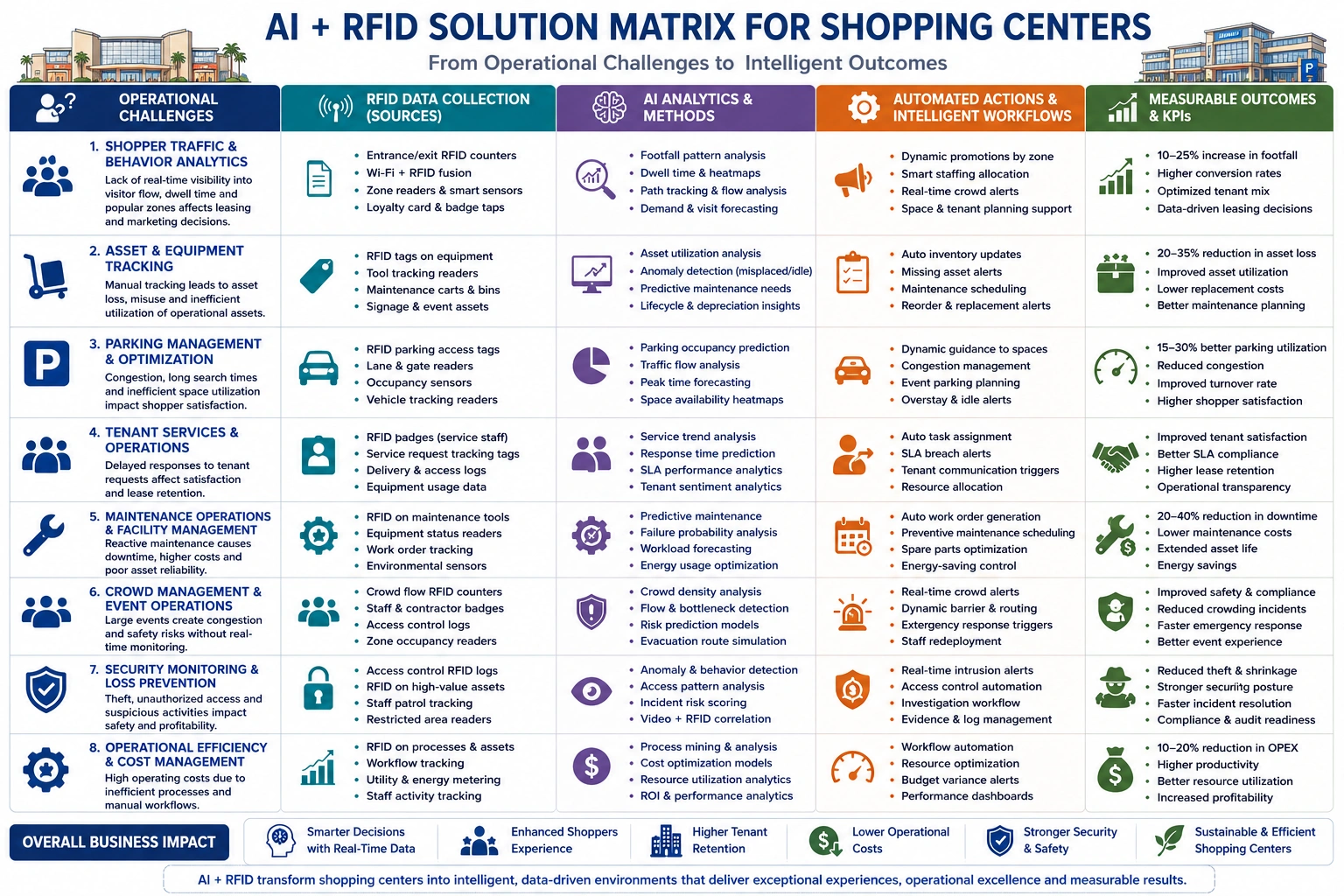
This matrix illustrates how shopping center operators can address key operational challenges using RFID-based data collection and AI analytics. It maps shopper traffic analysis, asset tracking, parking management, tenant services, maintenance operations, crowd management, security monitoring, and operational efficiency initiatives to intelligent workflows and measurable business outcomes such as improved customer experience, reduced costs, enhanced security, higher tenant satisfaction, and increased operational performance.
High-Value AI Applications Enabled by RFID Data in Shopping Centers
Shopper Traffic Intelligence
RFID-supported operational visibility combined with AI analytics helps shopping center operators understand:
- Visitor movement patterns
- High-traffic corridors
- Popular retail zones
- Seasonal shopping behaviors
- Event participation trends
Insights support leasing strategies, promotional planning, and operational optimization.
Parking Management Optimization
Parking facilities are critical components of the shopping experience.
AI systems analyze RFID-generated parking access information to:
- Predict occupancy levels
- Reduce congestion
- Improve traffic flow
- Support event planning
- Optimize parking utilization
Smart Asset Tracking
RFID-tagged operational assets provide real-time visibility across shopping center properties.
AI helps identify:
- Underutilized equipment
- Missing assets
- Maintenance requirements
- Equipment relocation needs
- Resource utilization trends
Security Operations Intelligence
Security personnel benefit from AI-driven monitoring of RFID-enabled operational activities.
Applications include:
- Access monitoring
- Incident investigation
- Suspicious activity detection
- Workforce accountability
- Emergency coordination
Maintenance Operations Optimization
Shopping centers require continuous maintenance support across:
- HVAC systems
- Escalators
- Elevators
- Lighting systems
- Utility infrastructure
- Public spaces
AI analytics help prioritize maintenance activities and allocate resources efficiently.
Event and Promotional Campaign Management
Shopping centers frequently host:
- Product launches
- Seasonal promotions
- Community events
- Entertainment activities
- Brand activations
RFID-generated activity data helps operators evaluate event performance and optimize future planning.
Operational Workflow of AI-Enabled RFID Systems in Shopping Centers
Data Acquisition
RFID data is collected through strategically positioned readers across:
- Main entrances
- Parking facilities
- Service corridors
- Loading docks
- Retail support areas
- Equipment storage locations
- Security checkpoints
Data sources may include RFID-tagged assets, employee credentials, maintenance equipment, service vehicles, and operational resources.
Communication Infrastructure
Collected information is transmitted through:
- Ethernet networks
- Wi-Fi infrastructure
- Cellular connectivity
- Edge gateways
- Secure IP communications
to centralized processing environments.
Edge Processing and Operational Intelligence
Local processing systems perform:
- Data validation
- Event filtering
- Device monitoring
- Operational rule execution
- Initial analytics
before forwarding information to business systems.
Enterprise Software Integration
RFID-generated operational data integrates with:
- Computerized Maintenance Management Systems (CMMS)
- Property Management Systems (PMS)
- Building Management Systems (BMS)
- Security Information Systems
- Tenant Management Software
- Visitor Management Solutions
- Business Intelligence Systems
AI Analytics and Decision Support
Machine learning models analyze operational patterns, shopper movement, asset utilization, parking demand, and service performance to generate actionable recommendations.
Automated Operational Actions
AI-generated insights may trigger:
- Maintenance scheduling
- Security alerts
- Resource allocation decisions
- Parking optimization actions
- Tenant service workflows
- Operational reporting
Technology Components Supporting AI-Powered Shopping Center Operations
Successful AI-enabled shopping center solutions require coordinated integration of identification technologies, operational software, analytics systems, communications infrastructure, and business applications.
RFID Hardware Infrastructure
Shopping center deployments commonly utilize:
- UHF RFID readers for operational asset tracking
- HF RFID credentials for employee access management
- RFID-enabled maintenance equipment identification
- Fixed RFID reader installations
- Handheld inventory readers
- Smart parking access credentials
- Loading dock monitoring readers
- Service corridor tracking systems
- RFID antennas and edge devices
These components provide operational visibility across retail properties, common areas, service zones, parking facilities, and maintenance operations.
Artificial Intelligence Components
AI capabilities frequently include:
- Machine learning models
- Predictive analytics engines
- Demand forecasting systems
- Anomaly detection models
- Behavioral analysis tools
- Resource optimization algorithms
- Occupancy intelligence systems
- Operational performance analytics
Shopping centers increasingly use AI to improve leasing decisions, tenant support, security operations, parking utilization, and facility performance.
Software Systems
Typical deployments integrate with:
- Property Management Systems (PMS)
- Building Management Systems (BMS)
- Computerized Maintenance Management Systems (CMMS)
- Security Information and Event Management (SIEM) software
- Tenant Management Software
- Parking Management Systems
- Business Intelligence Software
- Energy Management Systems
- Visitor Management Software
Communication Infrastructure
Reliable communications are critical for continuous operations.
Common technologies include:
- Ethernet networks
- Wi-Fi infrastructure
- Private cellular networks
- VPN connectivity
- Edge gateways
- Secure IP communications
- Cloud connectivity services
Cloud Deployment Model
Cloud-hosted deployments are particularly valuable for:
- Multi-property shopping center portfolios
- Regional mall operators
- National retail property groups
- Distributed management teams
Benefits include:
- Centralized reporting
- Cross-property benchmarking
- Simplified software updates
- Portfolio-wide visibility
- Scalable analytics resources
Server Deployment Model
Privately hosted server deployments are commonly selected when shopping centers require:
- Greater control over operational data
- Strict cybersecurity policies
- Integration with internal corporate systems
- Regulatory compliance requirements
These deployments may operate within:
- Private cloud environments
- Corporate data centers
- Customer-managed hosting facilities
- Edge computing environments
Hybrid Deployment Approaches
Many shopping center operators implement hybrid solutions.
Examples include:
- Local security processing with centralized reporting
- On-site parking management with cloud analytics
- Local asset tracking combined with portfolio dashboards
- Edge-based event monitoring with centralized business intelligence
Cybersecurity, Privacy, and Operational Resilience
Shopping centers manage sensitive operational information involving tenants, service providers, employees, contractors, and facility operations.
RFID Security Controls
Important protections include:
- Credential authentication
- Reader authorization
- Secure device management
- Tag encryption where appropriate
- Controlled access permissions
AI-Based Security Monitoring
Artificial intelligence helps identify:
- Suspicious movement patterns
- Unauthorized access attempts
- Abnormal operational activities
- Security incidents
- Unusual after-hours behavior
Network Protection
Shopping center operators commonly implement:
- Network segmentation
- Encrypted communications
- Secure remote access
- Identity management controls
- Continuous monitoring systems
Operational Continuity
Reliable deployments should include:
- Backup communications
- Redundant processing systems
- Disaster recovery procedures
- Equipment health monitoring
- Automated alerting systems
Practical deployments demonstrate that resilience planning significantly reduces operational disruptions during maintenance activities, network outages, and emergency situations.
GAO has supplied RFID hardware and identification technologies supporting secure operational visibility across commercial real estate environments for many years.
Business Benefits and Operational Improvements
AI-powered operational intelligence supported by RFID-generated data provides measurable benefits throughout shopping center operations.
Improved Shopper Experience
Shopping center operators gain better understanding of:
- Customer movement patterns
- High-demand retail zones
- Queue management opportunities
- Parking convenience factors
- Event engagement levels
These insights help improve overall visitor satisfaction.
Enhanced Tenant Support
Improved operational visibility enables:
- Faster service delivery
- Better maintenance coordination
- Improved resource allocation
- More informed leasing decisions
- Enhanced operational transparency
Better Asset Utilization
Organizations can reduce:
- Asset loss
- Equipment search times
- Inventory inaccuracies
- Resource inefficiencies
- Maintenance delays
Increased Security Effectiveness
Benefits include:
- Improved incident response
- Enhanced access monitoring
- Better situational awareness
- Faster investigations
- Increased accountability
More Efficient Parking Operations
AI-assisted parking intelligence supports:
- Reduced congestion
- Improved traffic flow
- Better occupancy forecasting
- Enhanced customer convenience
- Event traffic planning
Improved Facility Management
Maintenance teams can optimize:
- Preventive maintenance schedules
- Resource deployment
- Contractor coordination
- Equipment utilization
- Operational performance
Implementation Best Practices for Shopping Center Deployments
Successful implementations require careful planning, integration, and operational alignment.
Establish Clear Business Objectives
Common objectives include:
- Shopper analytics
- Parking optimization
- Tenant service improvements
- Asset tracking
- Security enhancement
- Operational efficiency
Evaluate Existing Systems
Review:
- Security systems
- Property management software
- Maintenance systems
- Network infrastructure
- Parking management solutions
- Building management systems
Conduct Pilot Projects
Pilot deployments help validate:
- Reader placement
- Data quality
- Workflow integration
- AI model performance
- Operational impact
Define Governance Policies
Organizations should establish:
- Data retention policies
- Privacy requirements
- Access permissions
- Reporting standards
- Operational responsibilities
Continuously Optimize Operations
Long-term success requires:
- Performance reviews
- Model retraining
- Operational audits
- Infrastructure updates
- Security assessments
Experience across commercial real estate projects shows that phased deployment strategies often produce better outcomes than large-scale immediate rollouts.
Key Takeaways for AI-Powered Shopping Center Intelligence
AI-enabled shopping center solutions supported by RFID-generated operational data provide valuable visibility into shopper activity, asset utilization, tenant services, parking operations, maintenance performance, and security activities. These capabilities help shopping center operators improve customer experiences, support tenant success, optimize operational resources, and strengthen property performance.
Organizations implementing these solutions should focus on business objectives first, followed by technology selection, software integration, cybersecurity planning, governance policies, and continuous optimization. Properly executed deployments can generate meaningful improvements in operational efficiency, service quality, and commercial performance.
Headquartered in New York City and Toronto, GAO is recognized among the leading global suppliers of RFID and related identification technologies. We continue helping organizations deploy practical solutions that improve visibility, automation, and operational intelligence across commercial real estate environments.
Building the Future of Industrial AI and IoT with Aperture Venture Studio and GAO
For more than three decades, GAO and its affiliated organizations have invested extensively in RFID, BLE, IoT, and industrial technology research and development. As artificial intelligence becomes increasingly valuable for shopping center operations, retail property management, asset visibility, and operational intelligence, we continue advancing AI-enabled IoT solutions that address real-world business challenges.
To further accelerate innovation across AI, IoT, retail technology, and commercial real estate applications, we established Aperture Venture Studio to support the development and advancement of practical AI and connected technology solutions for property operations and intelligent environments.
Aperture has attracted leading AI specialists, IoT experts, operational executives, investors, and technology organizations. Through initiatives such as Aperture Ventures Summit and TekSummit, we continue fostering technical collaboration and discussion around advanced AI and IoT topics.
GAO has served Fortune 500 companies, major research organizations, universities, and government agencies throughout the United States and Canada while maintaining strong quality assurance standards and providing expert technical support both remotely and onsite.
We welcome collaboration with:
- Advisors and industry experts
- Investors interested in AI and IoT technologies
- Organizations seeking RFID and intelligent operational solutions