
Overview
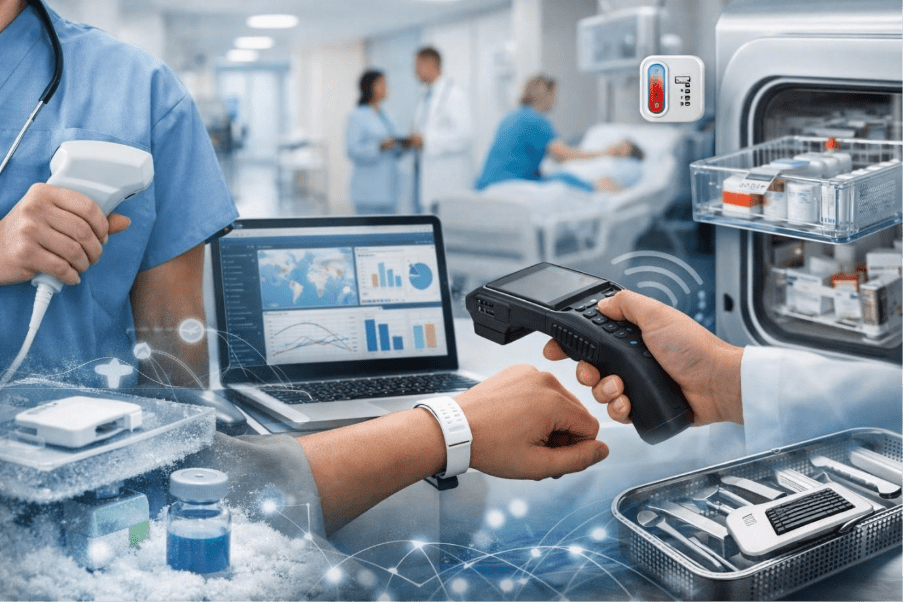
Medical practice environments depend on accurate tracking of medical assets, reliable patient identification, staff workflow visibility, and strict regulatory compliance. Clinics, outpatient facilities, and specialized medical practices frequently face operational issues such as misplaced medical devices, inefficient patient throughput, equipment sterilization tracking, and manual inventory processes for medications and consumables. BLE, RFID, IoT, and M2M technologies address these challenges by enabling automated identification, real time location tracking, environmental monitoring, and data integration with electronic health systems.
Healthcare organizations deploy these technologies to reduce administrative workload, improve patient safety, and ensure traceability for regulatory audits. GAO provides integrated hardware and system architectures that have successfully addressed these operational challenges in medical practice environments across North America and other regions.
Speak or Attend a Session Related to Medical Practice Industries at TekSummit

GAO IoT Hardware Products Widely Deployed in Medical Practice Industries
BLE Active Devices
BLE Gateways
RFID Tags Relevant for Medical Practice
IoT & M2M Connectivity Platforms
GAO Solutions Widely Deployed in Medical Practice Industries
Clinical Equipment & Medical Asset Tracking Systems
Medical Supplies & Clinical Inventory Management Systems
Clinic Access Control & Secure Medical Area Systems
Medical Staff, Patient & Visitor Tracking Systems
Clinic Parking & Medical Facility Vehicle Systems
Medical Office Infrastructure & Facility Development Systems
Diagnostic Equipment & Specialized Medical Systems
Medical Training, Education & Research Asset Systems
GAO Case Studies in Medical Practice Industries
United States Case Studies
Medical Equipment Tracking in New York City, New York
- Problem
Large outpatient medical practice centers in New York City experienced frequent equipment loss and inefficient utilization of shared devices such as portable ultrasound scanners and infusion pumps. Staff spent significant time searching for equipment between examination rooms.
- Solution
BLE asset tags were attached to high value medical devices. A network of ceiling mounted BLE gateways transmitted location signals to an asset management platform integrated with the clinic’s scheduling software.
- Result
Equipment search time decreased by approximately 70 percent and device utilization increased by 22 percent within six months.
- Operational lesson
Dense clinical environments may require additional gateway density to maintain reliable positioning accuracy.
Patient Identification Workflow Improvement in Boston, Massachusetts
- Problem
A large multi specialty clinic faced patient identification errors during high volume appointment periods. Manual verification created bottlenecks during registration and patient movement between departments.
- Solution
RFID enabled patient wristbands were introduced at registration. Readers installed at departmental entry points automatically verified patient identity against appointment records.
- Result
Patient misidentification incidents were reduced by 40 percent while registration processing time decreased by roughly 25 percent.
- Operational lesson
Integration with electronic health record systems required structured data mapping to maintain patient privacy compliance.
Vaccine Storage Monitoring in Chicago, Illinois
- Problem
Primary care clinics must maintain strict temperature conditions for vaccines and biologics. Manual temperature logging created compliance risk and delayed response to equipment failures.
- Solution
Temperature sensing RFID tags were installed within vaccine storage units and connected to IoT monitoring gateways. Data was transmitted to a centralized monitoring platform.
- Result
Continuous environmental monitoring reduced temperature deviation incidents by approximately 85 percent.
- Operational lesson
Backup cellular connectivity was necessary to ensure alert delivery during local network outages.
Sterilization Instrument Traceability in Houston, Texas
- Problem
A surgical specialty practice needed traceability of surgical instruments across sterilization cycles to meet compliance documentation requirements.
- Solution
RFID tags resistant to high temperature sterilization processes were attached to surgical trays. Readers were placed in sterilization and storage areas to record movement automatically.
- Result
Sterilization audit preparation time was reduced by nearly 60 percent while instrument misplacement incidents dropped significantly.
- Operational lesson
Tag durability testing was necessary due to repeated exposure to high pressure sterilization processes.
Patient Flow Optimization in Los Angeles, California
- Problem
Long patient wait times occurred during peak appointment hours at a large dermatology clinic. Manual tracking made it difficult to identify workflow bottlenecks.
- Solution
BLE wearable badges allowed patient movement tracking across waiting areas, diagnostic rooms, and treatment rooms. Data analytics identified congestion points.
- Result
Average patient visit time decreased by approximately 18 percent.
- Operational lesson
Privacy policies required anonymization of location analytics data.
Clinical Asset Management in Seattle, Washington
- Problem
Medical practices operating multiple clinic locations struggled to maintain visibility of shared diagnostic devices and mobile carts.
- Solution
RFID asset tags and readers were deployed across clinics with IoT connectivity linking location data to a central asset management dashboard.
- Result
Device relocation tracking improved asset utilization by 30 percent.
- Operational lesson
Cross facility synchronization required standardized asset identification protocols.
Staff Safety Monitoring in Miami, Florida
- Problem
Staff in certain medical practices faced safety risks during late operating hours and during interactions with distressed patients.
- Solution
BLE wearable badges with emergency alert capability were deployed. Alerts triggered location based notifications to supervisors.
- Result
Emergency response time improved by approximately 50 percent.
- Operational lesson
Alert systems require reliable indoor positioning accuracy to avoid false location reports.
Medical Inventory Tracking in Phoenix, Arizona
- Problem
High value medical consumables and implants required accurate inventory tracking to avoid shortages or expiration.
- Solution
RFID labeled inventory bins were combined with automated readers to capture item movement within storage areas.
- Result
Inventory accuracy improved from approximately 82 percent to 97 percent.
- Operational lesson
Regular tag calibration ensured reliable reading within dense storage environments.
Canadian Case Studies
Medical Device Tracking in Toronto, Ontario
- Problem
Large outpatient clinics in Toronto required improved visibility of shared medical equipment across departments.
- Solution
BLE asset tags connected to IoT gateways enabled real time tracking through a centralized monitoring system.
- Result
Staff search time for mobile devices decreased by roughly 65 percent.
- Operational lesson
Infrastructure planning was required to prevent signal interference from medical equipment.
Patient Flow Monitoring in Vancouver, British Columbia
- Problem
Clinics experienced scheduling delays due to lack of visibility into patient movement and examination room availability.
- Solution
RFID enabled patient identification combined with room occupancy sensors provided real time workflow analytics.
- Result
Patient throughput increased by approximately 20 percent.
- Operational lesson
Workflow redesign was necessary to fully utilize real time analytics insights.
Pharmaceutical Storage Monitoring in Montreal, Quebec
- Problem
Temperature sensitive medications required automated compliance documentation for regulatory inspections.
- Solution
IoT sensors monitored temperature and humidity conditions and transmitted alerts to a centralized compliance dashboard.
- Result
Manual record keeping was eliminated and compliance audit preparation time decreased by approximately 75 percent.
- Operational lesson
Sensor placement within refrigeration units must avoid airflow obstruction to ensure accurate readings.
Join TekSummit: A Highly Impactful Global Virtual Conference with Sessions Dedicated to Medical Practice Industries
TekSummit is a global virtual conference highlighting the latest advancements in BLE, RFID, IoT, AI, Cloud, T&M, and their applications. We have many sessions dedicated to or related to the Medical Practice Industries.
Speaking at TekSummit is by invitation only, based on the analysis of our research team and recommendations by industry experts. If you have received an invitation and you are interested in presenting, please email us an abstract of your presentation on a topic of your choice.
However, if you do not have an invitation, please feel free to email us your proposal on the topic of your expertise to the TekSummit Review Committee.
Everyone is welcome to attend TekSummit free of charge, including technical and management professionals, as well as students.
Our products and systems have been developed and deployed for a wide range of industrial applications. They are available off-the-shelf or can be customized to meet your needs. If you have any questions, our technical experts can help you.
For any further information on GAO’s products and systems, to request evaluation kits, free samples, recorded video demos, or explore partnership opportunities, please fill out this form or email us.